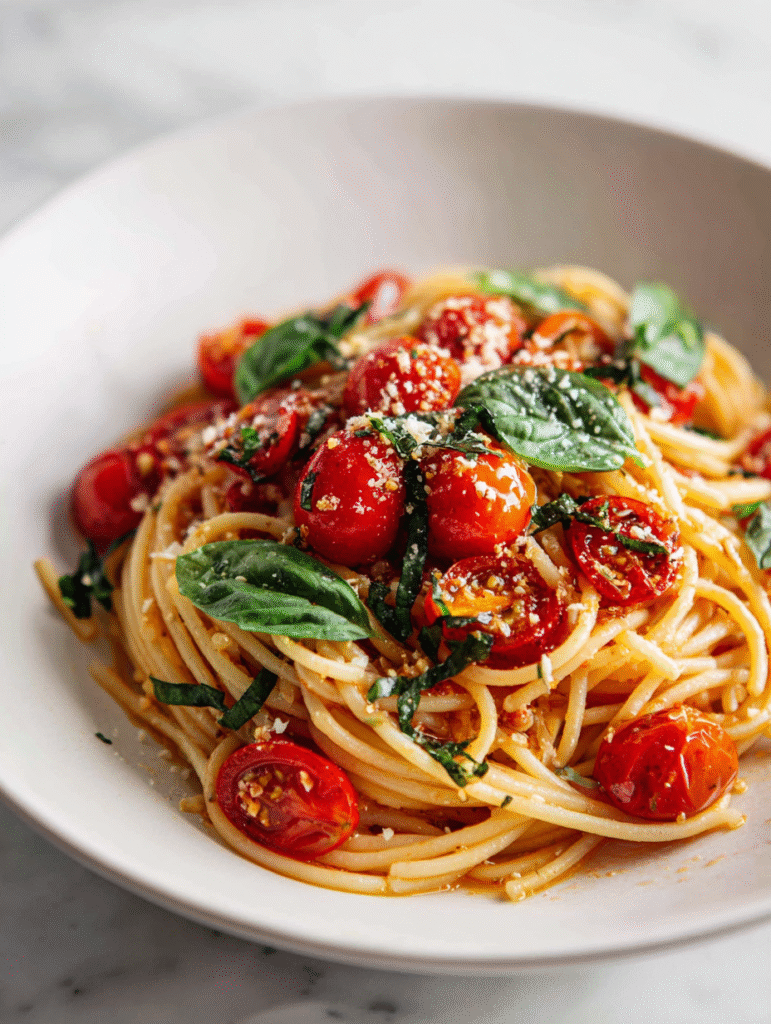
On those chaos-filled nights when time is tight and energy is low, I turn to this vegan tomato basil pasta. It’s a lifesaver, really—packed with flavor but made from pantry staples I always have on hand. No fancy ingredients, no fuss, just a bowl of warm, comforting pasta that feels like a little victory after a long day.
What I love most is how this dish manages to taste bright and fresh without needing a trip to the store. Ripe canned tomatoes, a handful of basil, and some good olive oil come together in a simple sauce that’s surprisingly vibrant. It’s honest, straightforward cooking that turns everyday ingredients into something satisfying and nourishing in under 20 minutes.
Focusing on how this vegan tomato basil pasta can be a quick, comforting weeknight fix that uses only pantry staples, making it accessible even on the busiest days.
Inspiration from a Busy Night
One summer, I was stranded with a nearly empty pantry and a craving for something bright and fresh. I threw together this pasta as a quick fix, relying on just canned tomatoes, fresh basil, and a splash of olive oil. That simple bowl became a go-to for busy nights when I wanted comfort without the fuss. Over time, I realized how much flavor can come from the most basic ingredients if treated with care and a little patience.
Ingredient breakdown: key components
- Canned crushed tomatoes: I love the rich, slightly tangy punch they bring—opt for fire-roasted for smoky depth, but if you prefer smoother sauce, blend briefly before cooking.
- Fresh basil: The aroma floods the kitchen, so add it at the end to keep that vibrant, sweet scent alive—skip if you’re out, though it won’t be quite the same.
- Garlic: The sizzle when it hits hot oil is unmistakable—don’t rush, let it turn golden and fragrant, but pull it early if it starts to burn bitter.
- Olive oil: I use a good extra-virgin for that fruity, peppery note—if you want a lighter feel, swap for avocado oil, but expect a slightly milder flavor.
- Salt & pepper: The basics, but crucial—season slowly, tasting as you go. A pinch of flaky sea salt really brightens the sauce’s natural sweetness.
- Pasta: I prefer spaghetti for its twirlability—al dente, of course, so it holds onto that sauce, but penne works well if you like a bit more bite.
- Optional chili flakes: Just a sprinkle adds a subtle heat—start small, then go for more if you’re craving a fiery kick.
Spotlight on key ingredients
Canned crushed tomatoes:
- I love the rich, slightly tangy punch they bring—opt for fire-roasted for smoky depth, but if you prefer smoother sauce, blend briefly before cooking.
- Fresh basil: The aroma floods the kitchen, so add it at the end to keep that vibrant, sweet scent alive—skip if you’re out, though it won’t be quite the same.
- Garlic: The sizzle when it hits hot oil is unmistakable—don’t rush, let it turn golden and fragrant, but pull it early if it starts to burn bitter.
Fresh basil:
- The bright, sweet aroma is unmistakable—add near the end to preserve its scent and vibrancy. It wilts quickly, so stir gently.
- Olive oil: I prefer a fruity, peppery extra-virgin—its rich aroma and silky texture help build flavor. For a lighter touch, swap with avocado oil, but expect a milder note.
Notes for ingredient swaps
- Canned crushed tomatoes: I prefer fire-roasted for smoky depth, but use regular for a milder, sweeter tomato flavor.
- Fresh basil: If out, substitute with a teaspoon of dried basil—less vibrant but still aromatic, add at the end.
- Garlic: Roasted garlic can add a sweet, mellow note—just mash and stir in after cooking for a different depth.
- Olive oil: Swap for avocado oil for a milder, buttery taste, or use walnut oil for nuttiness—be mindful of strong flavors.
- Salt & pepper: Sea salt is my go-to, but Himalayan salt offers a different mineral note. Adjust seasoning to taste.
- Pasta: Whole wheat or gluten-free options work, but expect a different texture and slightly nuttier flavor.
- Chili flakes: Use smoked paprika for a smoky kick or a dash of cayenne for heat—start small and taste as you go.
Equipment & Tools
- Large pot: Boil pasta efficiently in ample water.
- Skillet: Cook sauce and toss pasta for even coating.
- Colander: Drain pasta without excess water.
- Knife: Chop garlic and basil with precision.
- Wooden spoon: Stir sauce and pasta gently without scratching.
Step-by-step guide to vegan pasta
- Gather all equipment: a large skillet, a wooden spoon, a colander, and a sharp knife. The skillet is for sauce and pasta, the colander for draining, the knife for chopping basil and garlic.
- Bring a large pot of water to a boil—around 100°C (212°F). Add a generous pinch of salt. When boiling, add pasta (spaghetti or your choice). Cook for 8-10 minutes until al dente. Taste a strand to check for firmness.
- While pasta cooks, heat the skillet over medium heat—about 160°C (320°F). Add 2 tbsp olive oil. Once shimmering, add minced garlic (about 2 cloves). Sizzle until fragrant, about 30 seconds—be careful not to burn it, or it turns bitter.
- Pour in a 14 oz can of crushed tomatoes. Stir well and bring to a gentle simmer. Let it cook for 8-10 minutes, stirring occasionally. The sauce should thicken slightly and smell bright and tangy.
- Drain the pasta in the colander, reserving a cup of pasta water. Add the drained pasta to the skillet with sauce. Toss everything together over low heat for 1-2 minutes, adding a splash of reserved pasta water if needed to loosen the sauce.
- Tear fresh basil leaves (about 1/4 cup) directly into the skillet. Stir quickly to release their aroma. Check seasoning—add more salt or pepper if needed. The sauce should be vibrant and slightly oily, sticking nicely to the pasta.
- Remove from heat. Rest for 1-2 minutes. Plate the pasta, garnish with more basil if desired, and drizzle with a little olive oil for extra shine and flavor.
Let the pasta rest for 1-2 minutes after plating. Finish with a drizzle of olive oil and extra basil. Serve immediately while warm and fragrant.
How to Know It’s Done
- Pasta is al dente, with a slight bite when bitten.
- Sauce is thick, bright, and coats the pasta evenly.
- Basil scent is fresh and fragrant, just added at the end.
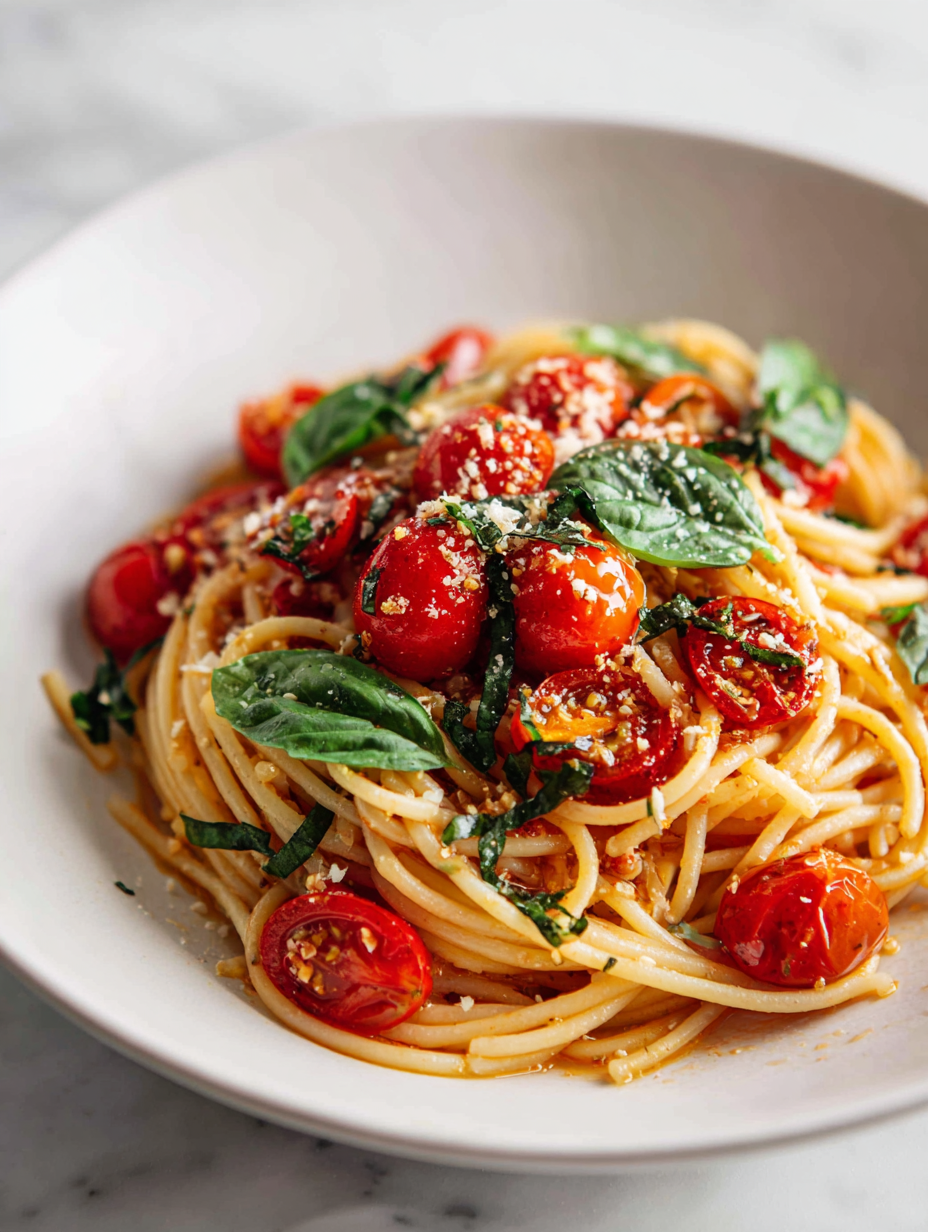
Vegan Tomato Basil Pasta
Ingredients
Equipment
Method
- Bring a large pot of salted water to a rolling boil. Add the pasta and cook until al dente, about 8-10 minutes, then drain and set aside.
- While the pasta cooks, heat olive oil in a skillet over medium heat until shimmering and fragrant. Add the minced garlic and cook for about 30 seconds until it turns golden and releases a nutty aroma.
- Pour in the canned crushed tomatoes, stirring to combine with the garlic. Bring the mixture to a gentle simmer and let it cook for about 8 minutes, allowing the sauce to thicken slightly and develop a bright, vibrant aroma.
- Season the sauce with salt, black pepper, and chili flakes if using. Taste and adjust the seasoning as needed. Stir in the torn basil leaves, letting their fragrant aroma infuse the sauce.
- Add the drained pasta directly into the skillet with the sauce. Toss gently with a wooden spoon to coat each strand evenly, allowing the pasta to absorb some of the sauce for about 1-2 minutes.
- Remove from heat and let sit for a minute. Transfer the pasta to serving bowls, drizzle with a little extra olive oil if desired, and garnish with additional basil leaves for a fresh finish.
Notes
Pro tips for perfect vegan pasta
- Bolded: Use a high-quality olive oil for a fruity, peppery base that enhances every bite.
- Bolded: Add garlic at the right moment—sizzle until golden and fragrant, but don’t let it burn, or it turns bitter.
- Bolded: When pouring in tomatoes, stir and let simmer gently—look for a thick, bright sauce that coats the pasta well.
- Bolded: Tear basil leaves directly into the sauce at the end—preserves their vibrant aroma and flavor.
- Bolded: Reserve a splash of pasta water before draining—use it to loosen the sauce if it thickens too much.
- Bolded: Taste and adjust seasoning at the end—salt and pepper bring out the sauce’s natural brightness.
- Bolded: Rest the pasta for a minute after plating—drizzle with olive oil and serve while warm for maximum flavor.
Common mistakes and how to fix them
- FORGOT to adjust heat → keep an eye on garlic to prevent burning.
- DUMPED all pasta → reserve some cooking water to loosen the sauce if needed.
- OVER-TORCHED sauce → lower heat if sauce darkens or smells burnt, then stir rapidly.
- MISSED seasoning step → taste and adjust salt and pepper at the end for best flavor.
Quick fixes and pantry swaps
- If sauce looks thin, simmer a few more minutes to thicken and intensify flavor.
- When pasta sticks, splash hot water or reserved pasta water and toss gently.
- Splash some lemon juice if sauce feels flat—brightens and enhances tomato flavor quickly.
- Patch overburnt sauce with a spoonful of tomato paste—adds richness without bitterness.
- Shield delicate basil from heat—add it last, and stir gently to preserve aroma.
Prep, store, and reheat tips
- Prep the sauce ingredients: chop garlic and basil, and measure out canned tomatoes in advance; the aromas will be more vibrant when fresh. Keeps well in the fridge for up to 2 days.
- Cook and drain the pasta ahead: store in an airtight container in the fridge for up to 24 hours. Toss with a little olive oil to prevent sticking, and reheat gently to avoid mushiness.
- Refrigerate leftovers promptly: store cooled pasta and sauce separately in airtight containers for up to 2 days. The sauce may thicken; stir in a splash of warm water or reserved pasta water when reheating.
- Reheating tips: warm in a skillet over low heat, stirring frequently, until heated through and fragrant again. Expect a slightly softer texture, but the flavors should still shine.
- Flavor intensifies over time: after a day or two, the tomato and basil flavors meld into a more cohesive, slightly richer taste. Best enjoyed within 48 hours for optimal freshness.
Top questions about vegan pasta
1. Can I use fresh tomatoes instead of canned?
Use canned crushed tomatoes for ease and rich flavor. For a smoky touch, opt for fire-roasted varieties.
2. Can I skip basil or use dried basil?
Yes, fresh basil is best added at the end to keep its vibrant aroma. Dried basil can substitute but lacks the same brightness.
3. How do I know when the pasta is done?
Cook the pasta until al dente, usually 8-10 minutes. It should be firm but not hard, and hold sauce well.
4. What if the sauce gets too thick?
If the sauce thickens too much, stir in a splash of reserved pasta water to loosen it up and coat the pasta smoothly.
5. Can I use a different oil?
Use a good quality extra-virgin olive oil for a fruity, peppery flavor that enhances the dish’s brightness.
6. When should I add the garlic?
Add garlic when it’s sizzling and fragrant, about 30 seconds after it hits hot oil. Avoid burning to prevent bitterness.
7. When is the best time to add basil?
Stir in basil at the end of cooking to preserve its fresh aroma and vibrant color. Don’t cook it for too long.
8. How long can I store leftovers?
Leftover pasta can be stored in the fridge for up to 2 days. Reheat gently in a skillet with a splash of water or oil.
9. My sauce is too watery, what now?
If your sauce is too watery, simmer it a bit longer until it thickens and becomes glossy—about 5 minutes on low heat.
10. Should I season the sauce at the start or end?
Adjust seasoning at the end by tasting and adding more salt or pepper. A pinch of lemon juice brightens the flavors.
This pasta dish is a reminder that simple ingredients can come together in a way that feels both familiar and fresh. It’s perfect for busy nights when I want comfort without fuss, and the aroma alone always makes the kitchen feel warmer.
Even as seasons shift and ingredients change, this recipe remains a reliable favorite. It’s honest, straightforward, and keeps my pantry happy—ready for whenever I need a quick, satisfying meal that hits all the right notes.

Hi, I’m Lily Ashworth – and if you’ve ever cried over a burnt grilled cheese or served cereal for dinner after a kitchen disaster, you’re in the right place. The phrase “say a little prayer for the burnt toast” became a family joke – something we’d mutter while scraping crumbs into the sink and laughing at yet another kitchen misadventure.