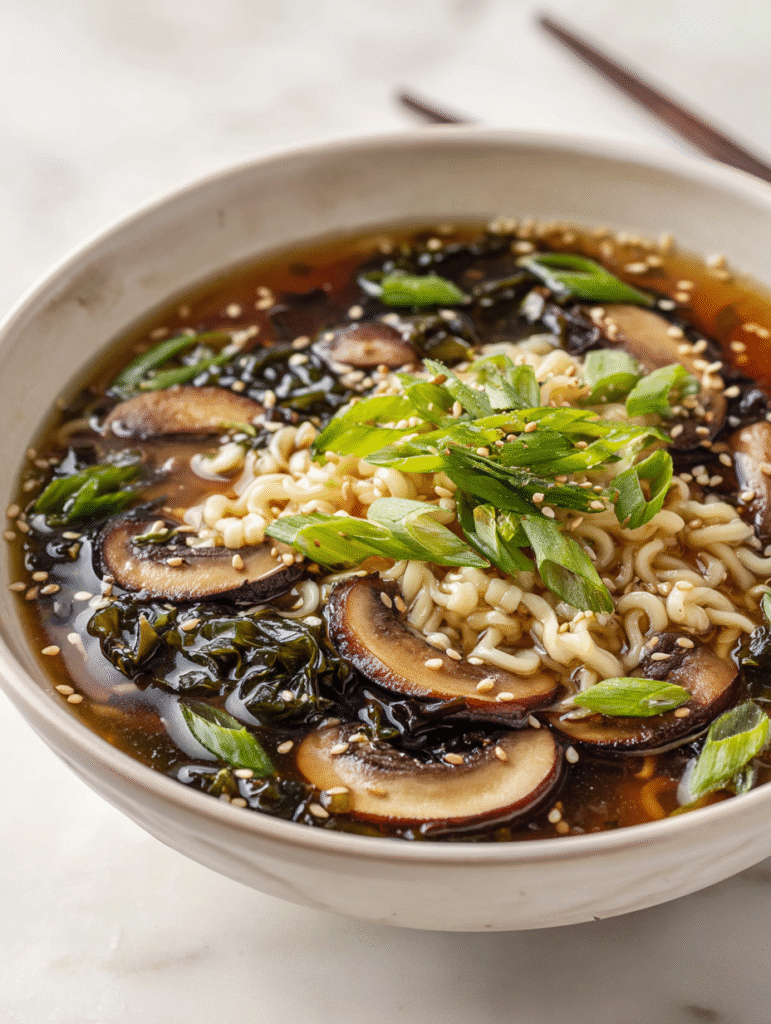
Vegan ramen often gets a bad rap for being one-dimensional, but I’ve found that building a deep, layered broth changes everything. It’s about taking the time to coax out umami from mushrooms, seaweed, and a few secret ingredients that add a smoky, briny punch. This recipe is my way of proving that plant-based can be rich, satisfying, and complex, no meat required.
I remember the first time I made this broth on a quiet Sunday afternoon. The kitchen filled with the earthy smell of mushrooms, a hint of seaweed shimmering in the air, and a gentle simmer that seemed to whisper promises of warmth and comfort. Since then, it’s become my go-to for cozy nights and when I crave something soulful but still fresh and vibrant.
Focusing on building depth with homemade mushroom and seaweed broths, this vegan ramen dives into umami layers that often get overlooked in plant-based versions.
The story behind this recipe
- This vegan ramen was born out of a late-night craving for something hearty but without the heaviness of traditional broths. I was experimenting with ingredients I had on hand—mushrooms, seaweed, and miso—and the depth of flavor was startling. It reminded me how simple pantry staples can transform into something unexpectedly rich and satisfying.
- One chilly evening, I simmered a pot of this broth, and the aroma filled my tiny kitchen—earthy, briny, with a smoky undertone. My partner wandered in, drawn by the scent, and said, ‘This smells like a bowl of comfort that’s actually good for you.’ That moment stuck with me; it’s what keeps me tweaking and perfecting this recipe. It’s honest, unpretentious, and exactly what I need when I want something nourishing without compromise.
- heading: ‘The story behind this recipe’
Ingredient breakdown
- Mushrooms: I love using shiitake for their rich, earthy aroma that really deepens the broth. If you can’t find shiitake, try portobello, but the flavor won’t be as intense.
- Seaweed: I prefer kombu because it adds a subtle brine and umami, but wakame can be a good alternative if you want a lighter, slightly sweeter taste. Soak it until tender for best results.
- Miso Paste: I use white miso for a mellow, slightly sweet flavor that balances the broth. Feel free to swap with yellow miso for more depth, but avoid dark miso if you want to keep it bright.
- Soy Sauce: I always choose a naturally brewed variety for that deep, complex saltiness. If you need gluten-free, coconut aminos work, but the flavor is sweeter and less umami.
- Tofu: I prefer extra firm, pressed well so it doesn’t fall apart. Try pan-frying for crispy edges, or gently simmer it in the broth if you want a softer bite, and imagine that silky texture.
- Green Onions: I love adding thinly sliced for that fresh, sharp bite. If you’re out, chives work nicely, but skip the shallots unless you want a subtler, sweeter note.
- Sesame Oil: Just a dash for a toasty, nutty aroma that ties everything together. If you want a smokier flavor, try toasted sesame oil, but use sparingly so it doesn’t overpower.
Spotlight on key ingredients
Shiitake Mushrooms:
- I love their meaty, earthy aroma that intensifies as they cook. If you can’t find them, portobellos work but lack that deep umami punch.
- Seaweed (Kombu): I rely on it for that subtle, briny flavor that enriches the broth. Soak until tender—skip it if you prefer a milder, less savory base.
Kombu and Tofu:
- Kombu (Seaweed): It releases a smoky, umami-rich aroma that fills the kitchen when simmered. Look for thick, fresh sheets for best flavor, and avoid overly dried or brittle pieces.
- Tofu: Extra-firm, pressed well, holds its shape beautifully, soaking up broth flavors without disintegrating. The silky texture contrasts nicely when gently simmered, adding a tender bite.
Notes for ingredient swaps
- Broth Base: Fresh shiitake mushrooms bring a meaty, earthy flavor, but dried porcini can add a smoky depth if shiitake are unavailable.
- Seaweed: Kombu offers a subtle brine, but wakame adds a sweeter, lighter umami; soak until tender and bright.
- Miso Paste: White miso gives a mellow, slightly sweet taste, while yellow miso adds more richness—use what fits your flavor mood.
- Soy Sauce: Naturally brewed soy provides deep saltiness; coconut aminos are a good gluten-free alternative with a milder, sweeter profile.
- Tofu: Extra-firm tofu holds its shape and soaks up broth beautifully; silken tofu can be used for a softer, creamier texture, but adjust cooking time.
- Noodles: Rice noodles are light and quick, but soba or whole wheat noodles give a more substantial bite—choose based on your craving.
- Sesame Oil: Toasted sesame oil adds a nutty aroma; for a smoky twist, try smoked sesame oil, but use sparingly so it doesn’t overpower.
Equipment & Tools
- Large pot: To simmer the broth and extract flavors from ingredients.
- Small saucepan: For toasting sesame seeds and preparing the miso slurry.
- Knife: To chop aromatics and tofu.
- Cutting board: To prep ingredients safely and efficiently.
- Fine-mesh strainer: To remove the kombu and mushroom solids from the broth.
Step-by-step guide to vegan ramen
- Gather your equipment: a large pot for broth, a smaller saucepan for prep, a sharp knife, a cutting board, and a fine-mesh strainer. Set everything within reach to keep your flow smooth.
- Start with the broth: in the large pot, combine dried shiitake mushrooms (about 1 oz), a piece of kombu (about 4 inches), and 4 cups of water. Bring to a gentle simmer over medium heat (around 85°C / 185°F).
- Simmer the broth: maintain a gentle simmer for 30 minutes, uncovered. During this time, the mushrooms will soften and release their earthy aroma, and the kombu will become tender and briny.
- Remove the kombu: after 30 minutes, take out the kombu and discard or set aside for another use. Keep the mushrooms in the broth for now; they’ll flavor it more as they soften.
- Prepare the aromatics: while the broth simmers, finely chop 2 green onions, 2 cloves garlic, and a 1-inch piece of ginger. In a small pan, toast 1 teaspoon of sesame seeds until fragrant, about 2 minutes, then set aside.
- Cook the noodles: bring a separate pot of water to a boil. Add 4 servings of your favorite Asian noodles (rice, soba, or wheat). Cook according to package instructions, usually 3-5 minutes. Drain and set aside.
- Finish the broth: in a small bowl, whisk together 3 tablespoons white miso paste and 2 tablespoons soy sauce. Once the broth has cooled slightly (around 70°C / 160°F), stir in the miso mixture, ensuring it dissolves completely.
- Add the tofu: cut 1 block of extra-firm tofu into small cubes. Gently simmer in the broth for 5 minutes, so they soak up flavor and stay tender.
- Assemble the bowls: divide the cooked noodles into bowls. Ladle hot broth over, ensuring tofu and mushrooms are evenly distributed. Top with fresh green onions, toasted sesame seeds, and a drizzle of toasted sesame oil.
- Final touches: serve immediately, enjoy the aroma of the simmered mushrooms and seaweed, and adjust seasonings if needed with a splash more soy or a squeeze of lemon for brightness.
Serve the ramen hot immediately. Garnish with green onions, sesame seeds, and a splash of sesame oil. For best flavor, eat within 20 minutes to enjoy the broth’s freshness and the noodles’ texture.
How to Know It’s Done
- Broth is rich and aromatic, with a deep mushroom and seaweed scent.
- Noodles are tender but not mushy, with a slight bounce when bitten.
- Tofu is soft yet holds shape, absorbing broth flavor without falling apart.
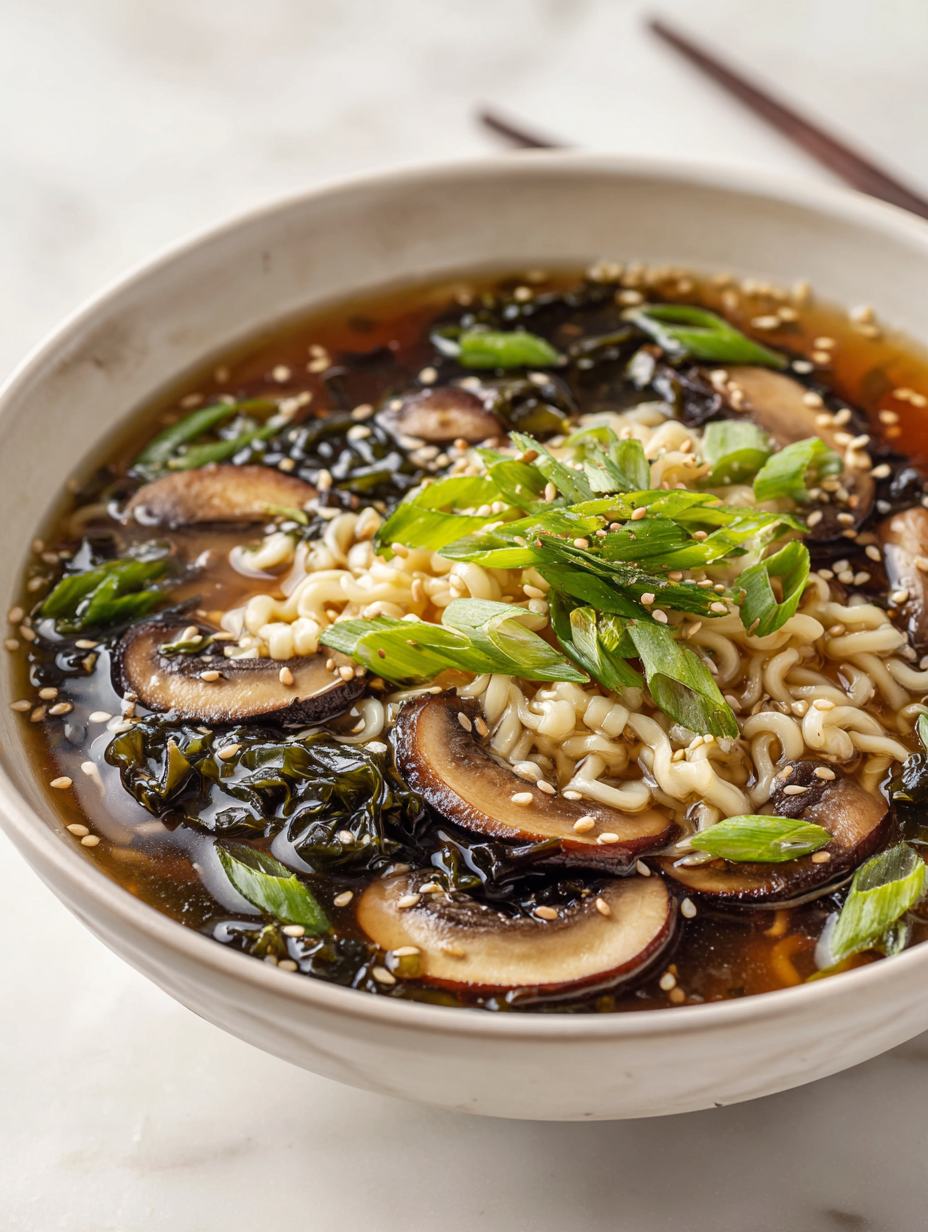
Vegan Mushroom and Seaweed Ramen
Ingredients
Equipment
Method
- Place the dried shiitake mushrooms and kombu seaweed in a large pot with four cups of water. Bring to a gentle simmer over medium heat, and let it simmer uncovered for 30 minutes. The aroma will become earthy and briny as the ingredients soften.
- While the broth simmers, bring water to a boil in a separate pot and cook your favorite noodles according to package instructions—usually 3 to 5 minutes—until tender but still firm. Drain and set aside.
- Once the broth has simmered for 30 minutes, remove the kombu using a fine-mesh strainer and discard it. Keep the shiitake mushrooms in the broth for added flavor. Whisk together the white miso paste and soy sauce in a small bowl, then gently stir this mixture into the hot broth, ensuring it dissolves completely. The broth will turn a rich, savory color and smell earthy and umami-rich.
- Meanwhile, cut the pressed tofu into small cubes. Gently add the tofu to the broth and simmer for another 5 minutes to let it soak up the flavors and stay tender.
- Divide the cooked noodles into four bowls. Ladle the hot broth with tofu and mushrooms over the noodles, distributing evenly. Top each bowl with sliced green onions and a sprinkle of toasted sesame seeds for added aroma and crunch.
- Finish each bowl with a drizzle of toasted sesame oil for a nutty aroma. Serve immediately while steaming hot, and enjoy the rich, earthy flavors of your homemade vegan ramen.
Notes
Pro tips for perfect vegan ramen
- Use a wide, shallow pan to increase surface area, helping broth reduce faster and deepen in flavor.
- Toast your sesame seeds until fragrant for a nuttier aroma that complements the broth’s earthiness.
- When simmering seaweed, keep the heat low to prevent bitterness and preserve the briny, smoky notes.
- Press tofu thoroughly and cut into uniform cubes for even cooking and maximum broth absorption.
- Add miso off the heat to prevent losing its delicate, probiotic qualities and to keep the broth bright.
- Keep noodles slightly undercooked; they’ll finish cooking in hot broth, preventing mushiness and maintaining bite.
- For a smoky depth, briefly char slices of green onion on an open flame or under a broiler before adding.
Common mistakes and how to fix them
- FORGOT to adjust heat → Broth can scorch; keep at gentle simmer.
- DUMPED ingredients too early → Let mushrooms fully soften for maximum flavor.
- OVER-TORCHED tofu → Gently simmer tofu, avoid boiling to maintain texture.
- SKIPPED straining broth → Remove solids for a clear, refined soup base.
Quick fixes and pantry swaps
- When broth lacks depth, splash a dash of soy or miso to boost umami.
- If noodles stick together, rinse with cold water and toss with a little sesame oil.
- Splash a few drops of lemon juice if broth tastes flat or dulls in flavor.
- Patch overcooked tofu by adding a fresh, firm piece just before serving.
- Shield simmering seaweed from direct heat to preserve its smoky, briny aroma.
Prep, store, and reheat tips
- Prep the broth ingredients: soak dried shiitake and kombu a day ahead, then refrigerate in an airtight container; flavors deepen overnight.
- Cook noodles ahead: drain and toss with a little sesame oil, store in a sealed container for up to 24 hours to prevent sticking.
- Cube and press tofu: do this a day before, keep refrigerated in water, change water once to maintain freshness.
- Refrigerate the assembled broth: once cooled, store in a container for up to 2 days; reheat gently, smelling for earthy and umami richness.
- Reheat carefully: warm in a pot over low heat, stirring occasionally; look for a fragrant, bubbling broth with bright notes, avoid boiling vigorously.
Top questions about vegan ramen
1. Can I use fresh mushrooms instead of dried shiitake?
Use dried shiitake for maximum umami, but fresh mushrooms work in a pinch, adding a more subtle earthy aroma.
2. How do I prepare seaweed for the broth?
Soak kombu in cold water for at least 15 minutes to release its briny flavor without bitterness.
3. Which miso should I use for the best flavor?
White miso keeps the broth bright and mellow. Yellow miso adds more depth but is less sweet.
4. Can I substitute soy sauce?
Soy sauce adds salt and depth; coconut aminos are a good gluten-free alternative, but they’re sweeter and less umami.
5. How do I prepare tofu for this ramen?
Press tofu for at least 15 minutes to remove excess water, so it absorbs broth better and stays firm.
6. What’s the best green topping for flavor?
Use thinly sliced green onions for freshness and sharpness. Chives can substitute, but shallots might add a sweeter note.
7. How do I add extra flavor to the broth?
Toasted sesame oil adds a toasty, nutty aroma. Use sparingly; for a smokier flavor, try smoked sesame oil.
8. How should I cook the noodles?
Cook noodles al dente, about 3–5 minutes, so they don’t become mushy during reheating or sitting.
9. How do I reheat leftover ramen?
Reheat gently over low heat, stirring often. The broth should shimmer with a rich, earthy aroma and be steaming hot.
10. How do I fix bland broth?
Adjust seasonings at the end—add more soy or lemon to brighten or deepen the flavor as needed.
This vegan ramen isn’t just a quick fix; it’s a reminder that plant-based food can be layered and soulful. The rich, umami broth, with its smoky seaweed and earthy mushrooms, makes every spoonful feel like a small victory.
Whenever I make this, I think about how simple ingredients can come together to create something deeply satisfying. It’s honest cooking—no fuss, just good, nourishing flavors that warm you from the inside out.

Hi, I’m Lily Ashworth – and if you’ve ever cried over a burnt grilled cheese or served cereal for dinner after a kitchen disaster, you’re in the right place. The phrase “say a little prayer for the burnt toast” became a family joke – something we’d mutter while scraping crumbs into the sink and laughing at yet another kitchen misadventure.