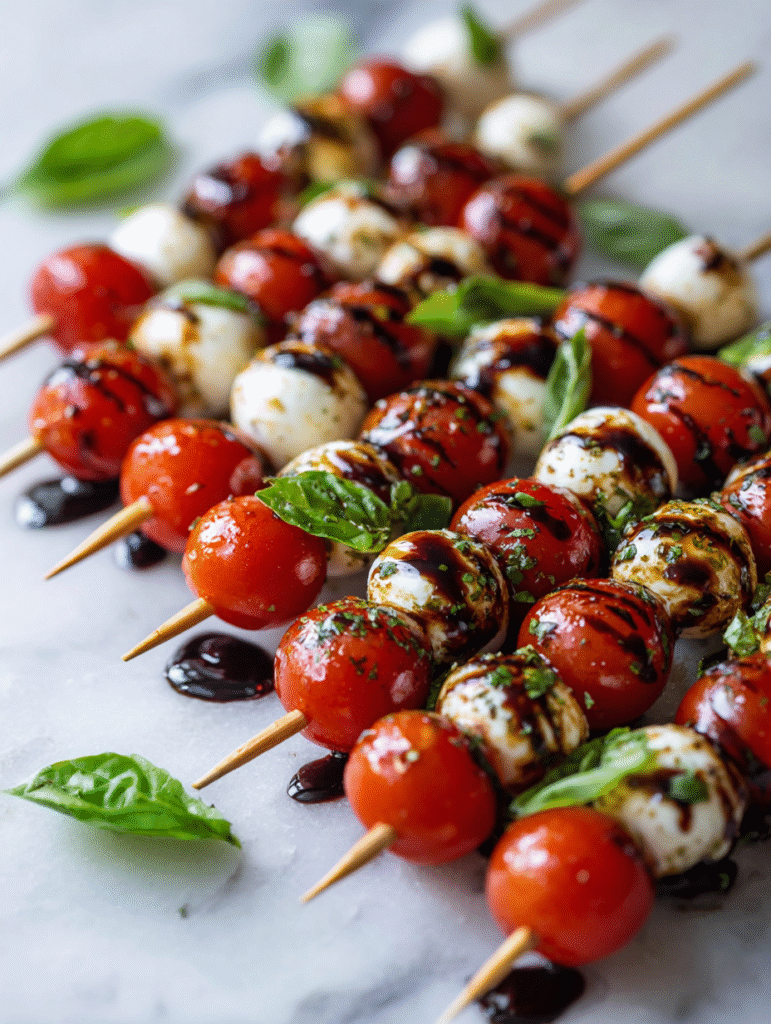
I stumbled onto this twist on classic Caprese at a summer picnic, where I wanted something fresh but portable. The skewers let me pack all those summer flavors into a neat little bite that’s easy to share. It’s a reminder that even simple ingredients can get a new life with just a tiny tweak.
Why These Skewers Keep Calling Me Back
Their simplicity is deceptive—each bite offers a complex play of flavors. The balance of sweet, acidic, and herbal notes makes it perfect for any season. Plus, the process is straightforward enough to whip up on a busy weeknight but special enough for guests.
Breaking Down the Key Players
- Cherry Tomatoes: Juicy and bright, they add a burst of sweetness. Swap with heirlooms for a richer flavor.
- Fresh Mozzarella: Creamy and soft, it balances acidity. Use feta for a saltier, sharper taste.
- Fresh Basil: Herby and fragrant, it lifts the dish. Substitute with arugula for a peppery bite.
- Balsamic Glaze: Sweet, tangy, and slightly smoky — the magic touch. Try a port reduction if you crave deeper sweetness.
- Olive Oil: A splash to smooth everything out. Skip if using a rich balsamic.
Tools & Equipment for Perfect Skewers
- Small saucepan: To gently heat and thicken the balsamic glaze.
- Skewers: To assemble and serve the ingredients in an appealing way.
- Kitchen tongs: To handle ingredients without crushing them.
- Cutting board and knife: To prepare the basil leaves and cut the mozzarella.
Crafting the Perfect Caprese Skewers — Step by Step
Step 1: Gather everything before you start — skewers, fresh mozzarella, ripe cherry tomatoes, fresh basil, and a good balsamic glaze.
Step 2: Thread a cherry tomato, a piece of mozzarella, and a basil leaf onto each skewer, arranging them in a colorful pattern.
Step 3: Heat the balsamic glaze in a small saucepan over low heat (about 80°C/176°F) until it thickens slightly, about 3-5 minutes.
Step 4: Drizzle the warm glaze over the assembled skewers just before serving to keep the basil vibrant and the cheese creamy.
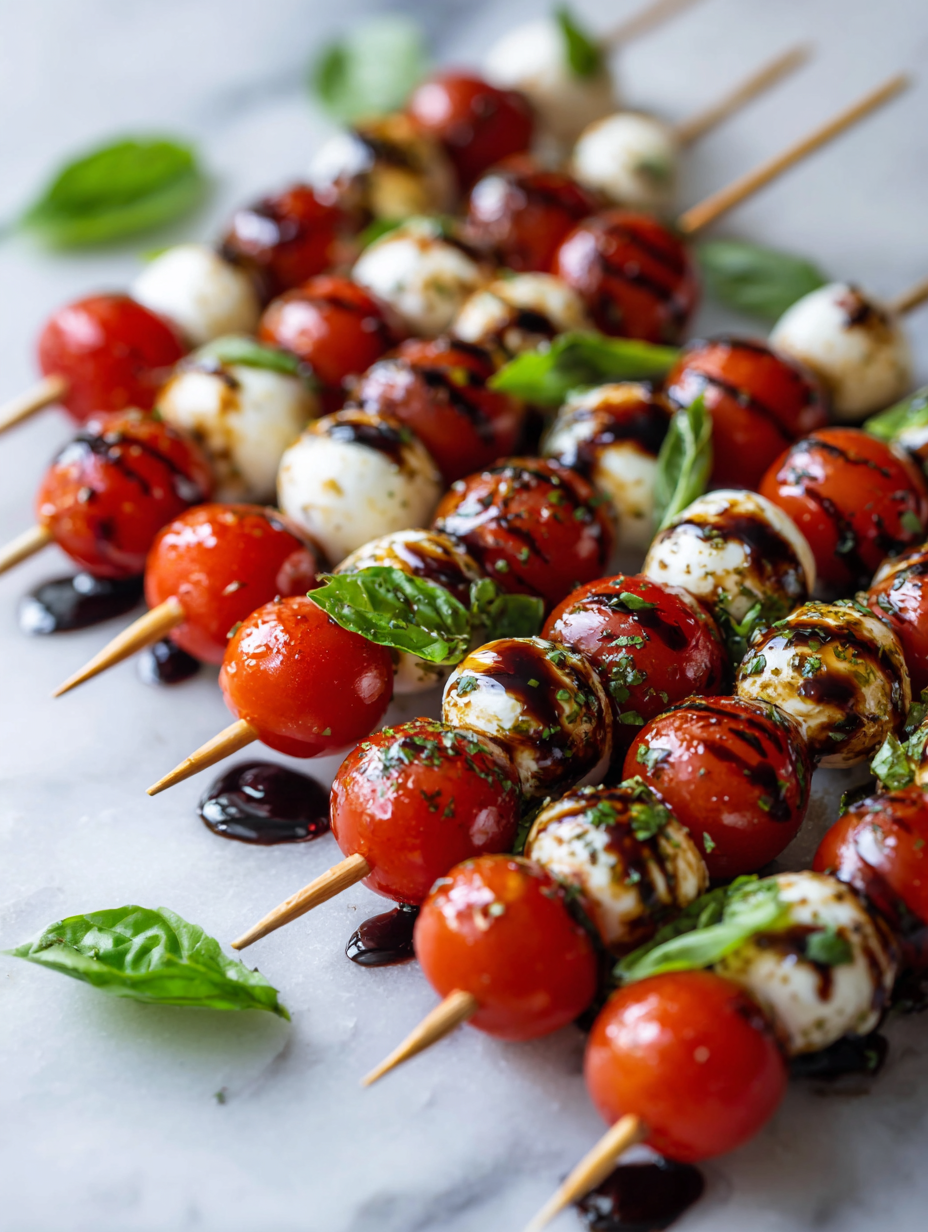
Caprese Skewers with Balsamic Glaze
Ingredients
Equipment
Method
- Gather all ingredients: cherry tomatoes, mozzarella, basil leaves, skewers, and balsamic glaze.
- Thread a cherry tomato onto a skewer, followed by a mozzarella ball, then a basil leaf. Repeat with remaining ingredients to fill each skewer, creating a colorful pattern.
- Pour the balsamic glaze into a small saucepan and warm over low heat. Let it simmer gently until it thickens slightly and develops a glossy texture, about 3-5 minutes.
- Use kitchen tongs to carefully hold each skewer and drizzle the warm balsamic glaze over the assembled ingredients, ensuring a light coating that enhances flavor and appearance.
- Arrange the skewers on a serving platter and give them a final touch of fresh basil for vibrant color and aroma.
- Serve immediately and enjoy the fresh, flavorful bites that combine sweet, tangy, and herbal notes in every delicious skewer.
Notes
Cooking Checkpoints & Tips for Success
- Ensure the mozzarella is fresh and firm, not rubbery. It should squeak slightly when pressed.
- Watch the balsamic glaze as it thickens — it can burn quickly once it hits the desired viscosity.
- Test the skewer assembly — ingredients should be snug but not smashed, with a good balance of colors.
- Keep the basil vibrant by adding it just before serving — wilting ruins the look and flavor.
Common Mistakes & How to Fix Them
- Skewers are uneven or ingredients slide off. Fix: Use shorter skewers or tighten ingredients.? OVER-TORCHED THE GLAZE — It turns bitter. Fix: Remove from heat immediately and add a splash of water to dilute.
- Basil wilts quickly and turns brown. Fix: Add basil just before serving to keep it fresh.? MOZZARELLA IS TOO WET — It makes the skewer soggy. Fix: Pat dry with paper towels before threading.
- The glaze is too runny. Fix: Continue simmering until it thickens to a syrupy consistency.? GATHERED ingredients are not room temp. Fix: Let cheese and tomatoes sit out for 10 minutes before assembling.
These skewers are a win for quick bites, especially when you want freshness that impresses without fuss. The sweet tang of the balsamic glaze ties everything together in a way that elevates simple ingredients. Feel free to swap basil for arugula if you’re feeling spicy, or add a sprinkle of flaky sea salt for extra punch.

Hi, I’m Lily Ashworth – and if you’ve ever cried over a burnt grilled cheese or served cereal for dinner after a kitchen disaster, you’re in the right place. The phrase “say a little prayer for the burnt toast” became a family joke – something we’d mutter while scraping crumbs into the sink and laughing at yet another kitchen misadventure.