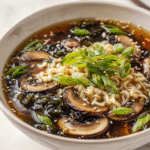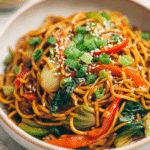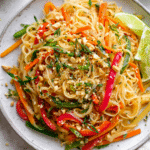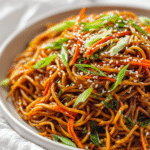
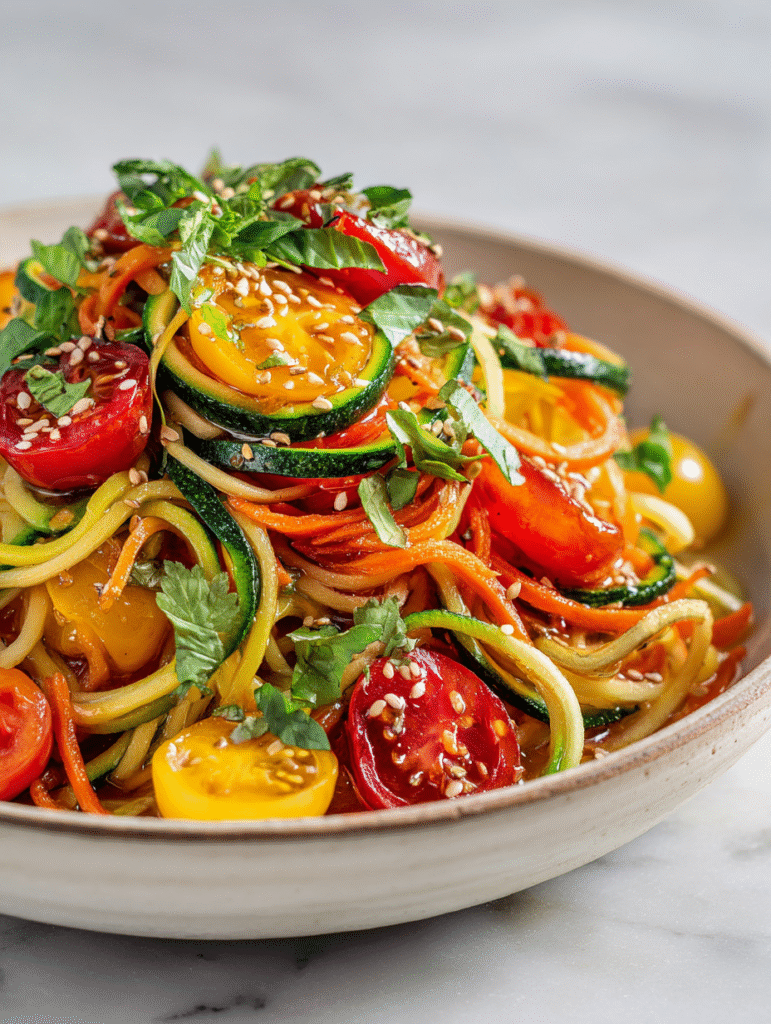
This vegan vegetable noodles recipe is all about transforming simple, everyday veggies into a vibrant, satisfying meal that comes together quick. It’s perfect for those busy weeknights when you want something wholesome without the fuss. The key is how the veggies retain their crunch while soaking up a punchy, savory sauce.
I love how versatile this dish is—swap in whatever greens or carrots you have lying around, and it still feels fresh and bright. It’s almost like a blank canvas that invites your own tweaks. Plus, there’s something oddly comforting about tossing noodles with crisp veggies and finishing with a splash of citrus or a sprinkle of sesame.
Focusing on how this dish transforms simple veggies into a vibrant, satisfying meal with minimal fuss, perfect for busy weeknights.
The story behind this recipe
- This recipe sprouted from a chaotic week when I had a fridge full of odds and ends but no time for a proper grocery run. I started tossing together whatever fresh veggies I had—carrots, bell peppers, a handful of spinach—and realized how satisfying it was to turn simple ingredients into something lively and filling. It became my go-to when I wanted a quick, nourishing meal that didn’t feel like a compromise.
- I remember one particular evening when I was exhausted after a long day, but the smell of garlic and sesame filling the kitchen lifted my spirits. That moment, tossing noodles with those bright, crunchy veggies, made me appreciate how honest, unpretentious cooking can be so rewarding. It’s this dish that reminds me sometimes the simplest things—done right—are the most memorable.
- heading
- story_type
Key Ingredients and Tips
- Zucchini: I love how zucchini stays tender yet slightly crisp when spiralized; it’s the backbone of this dish. Swap with cucumber if you want a cooler, more refreshing bite—just keep the peeling minimal to avoid too much water release.
- Carrots: I prefer using thin matchstick cuts for crunch and sweetness. If you’re in a hurry, grab pre-shredded carrots, but watch out for the extra moisture—pat them dry first to keep the noodles from getting soggy.
- Bell Peppers: Bright, crunchy, and slightly smoky when sautéed. Use any color you like, but red or orange really pop visually. Skip if you dislike a sweet contrast—just add a dash of chili for heat instead.
- Soy Sauce: I rely on a good, salty soy to anchor the flavor—brings that umami punch. For a milder taste, dilute with a splash of water or use coconut aminos—less salty, more mellow.
- Sesame Oil: I use toasted sesame oil for that nutty aroma that really brings the dish to life. Be cautious—just a teaspoon is enough, or it can overpower. Try a drizzle of avocado oil if you want a neutral finish.
- Garlic & Ginger: I keep these minced finely; they release a fragrant, pungent aroma that fills the kitchen. If you’re sensitive to spice, add garlic at the end to prevent bitterness—less than 30 seconds on high heat, and it’s perfect.
- Lime or Lemon: I squeeze fresh citrus just before serving for brightness—cuts through the richness and adds a zing. Use lemon if that’s what you have, but don’t skip this step—it’s the final pop of freshness.
Spotlight on key ingredients
Vegetables:
- Zucchini: I love how zucchini stays tender yet slightly crisp when spiralized; it’s the backbone of this dish. Swap with cucumber if you want a cooler, more refreshing bite—just keep the peeling minimal to avoid too much water release.
- Carrots: I prefer using thin matchstick cuts for crunch and sweetness. If you’re in a hurry, grab pre-shredded carrots, but watch out for the extra moisture—pat them dry first to keep the noodles from getting soggy.
- Bell Peppers: Bright, crunchy, and slightly smoky when sautéed. Use any color you like, but red or orange really pop visually. Skip if you dislike a sweet contrast—just add a dash of chili for heat instead.
Sauces & Oils:
- Soy Sauce: I rely on a good, salty soy to anchor the flavor—brings that umami punch. For a milder taste, dilute with a splash of water or use coconut aminos—less salty, more mellow.
- Sesame Oil: I use toasted sesame oil for that nutty aroma that really brings the dish to life. Be cautious—just a teaspoon is enough, or it can overpower. Try a drizzle of avocado oil if you want a neutral finish.
Notes for ingredient swaps
- Zucchini: I love how zucchini stays tender yet slightly crisp when spiralized; it’s the backbone of this dish. Swap with cucumber if you want a cooler, more refreshing bite—just keep the peeling minimal to avoid too much water release.
- Carrots: I prefer using thin matchstick cuts for crunch and sweetness. If you’re in a hurry, grab pre-shredded carrots, but watch out for the extra moisture—pat them dry first to keep the noodles from getting soggy.
- Bell Peppers: Bright, crunchy, and slightly smoky when sautéed. Use any color you like, but red or orange really pop visually. Skip if you dislike a sweet contrast—just add a dash of chili for heat instead.
- Soy Sauce: I rely on a good, salty soy to anchor the flavor—brings that umami punch. For a milder taste, dilute with a splash of water or use coconut aminos—less salty, more mellow.
- Sesame Oil: I use toasted sesame oil for that nutty aroma that really brings the dish to life. Be cautious—just a teaspoon is enough, or it can overpower. Try a drizzle of avocado oil if you want a neutral finish.
- Garlic & Ginger: I keep these minced finely; they release a fragrant, pungent aroma that fills the kitchen. If you’re sensitive to spice, add garlic at the end to prevent bitterness—less than 30 seconds on high heat, and it’s perfect.
- Lime or Lemon: I squeeze fresh citrus just before serving for brightness—cuts through the richness and adds a zing. Use lemon if that’s what you have, but don’t skip this step—it’s the final pop of freshness.
Equipment & Tools
- Spiralizer or julienne peeler: To create thin, noodle-like strands from vegetables.
- Large skillet or wok: For even heat and space to stir-fry the vegetables.
- Mixing bowl: To hold prepared vegetables before cooking.
- Sharp knife: For slicing peppers and mincing garlic and ginger.
Step-by-step guide to vegetable noodles
- Gather your equipment: a spiralizer or julienne peeler, a large skillet or wok, a mixing bowl, and a sharp knife. Preheat the skillet over medium heat, around 160°C (320°F).
- Prepare the vegetables: spiralize or julienne zucchini and carrots into thin noodles. Slice bell peppers into matchsticks. Mince garlic and ginger finely. Have lime or lemon wedges ready for serving.
- Cook the veggies: add a teaspoon of oil to the skillet. Once shimmering, toss in garlic and ginger; sauté for 30 seconds until fragrant. Add carrots and peppers; cook for 2-3 minutes, stirring until slightly tender but still crisp.
- Add zucchini: toss in the spiralized zucchini. Drizzle 1-2 tablespoons soy sauce and a teaspoon toasted sesame oil. Sauté for another 2 minutes, just until zucchini softens slightly. Keep stirring to prevent sticking or burning.
- Check for doneness: zucchini should be tender but still crisp, peppers bright and slightly blistered. The mixture should smell savory with a hint of sesame and garlic. If veggies release too much water, cook a little longer to evaporate excess moisture.
- Finish and plate: squeeze fresh lime or lemon over the noodles. Toss gently to combine. Serve immediately, garnished with optional sesame seeds or chopped scallions if desired. Rest for 1 minute before eating.
- Rest briefly: let the noodles sit off heat for a minute, allowing flavors to meld. Serve hot with a squeeze of citrus for a bright finish.
Serve the noodles immediately after tossing with citrus. Garnish with sesame seeds or scallions if desired. Rest for 1 minute to allow flavors to settle before eating.
How to Know It’s Done
- Veggies are crisp-tender and vibrant in color.
- Aromas of garlic, ginger, and sesame are fragrant without burning.
- Noodles are not soggy, with no excess water pooling in the pan.
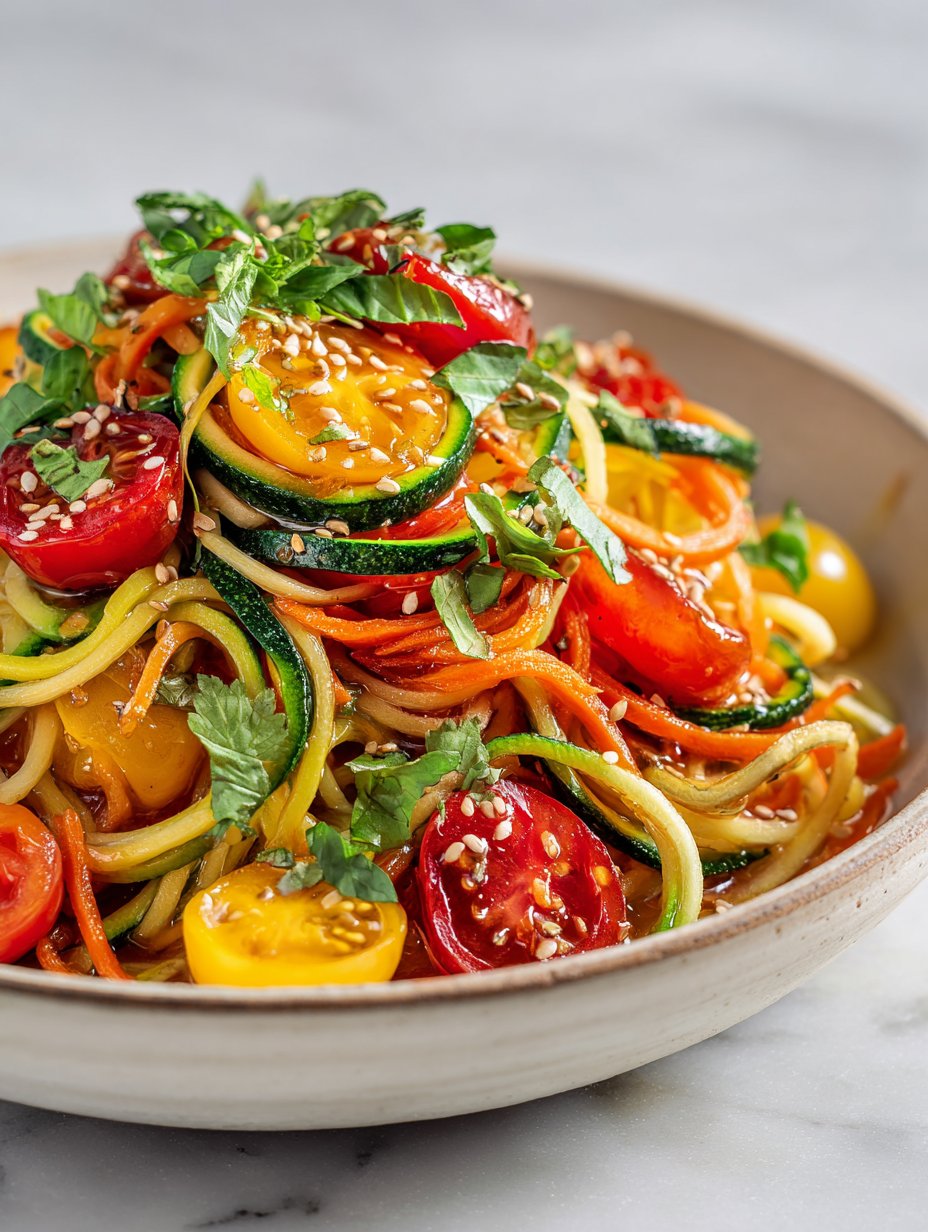
Vegan Vegetable Noodles
Ingredients
Equipment
Method
- Start by spiralizing or julienning the zucchini into thin noodles, then transfer to a large mixing bowl. Prepare the carrots and bell pepper into matchsticks, keeping them ready for stir-frying.
- Heat a large skillet or wok over medium heat until it’s shimmering. Add a teaspoon of oil if desired, then toss in the minced garlic and ginger. Sauté for about 30 seconds, until fragrant and just starting to turn golden.
- Add the sliced carrots and bell peppers to the pan. Stir-fry for 2-3 minutes, listening for the vegetables to become slightly tender but still crisp, and watching for bright colors and lightly blistered edges.
- Next, toss in the spiralized zucchini noodles. Pour over the soy sauce and drizzle with toasted sesame oil. Stir well to coat all the vegetables evenly, cooking for another 2 minutes until the zucchini is tender but still firm, and the flavors meld together.
- Check the texture—zucchini should be crisp-tender and vibrant, and the mixture fragrant with garlic, ginger, and sesame. If the dish looks a little watery, cook a minute longer to evaporate excess moisture.
- Squeeze fresh citrus juice over the noodles for brightness, then gently toss to combine all the flavors. Serve immediately, garnished with optional sesame seeds or scallions for extra crunch and color.
Pro tips for perfect veggie noodles
- Bolded mini-head: Use a spiralizer with sharp blades for cleaner, more uniform noodles.
- Bolded mini-head: Sauté garlic and ginger until fragrant—around 30 seconds—avoid burnt bitterness.
- Bolded mini-head: Cook vegetables in batches if needed—crowding causes steaming, not stir-frying.
- Bolded mini-head: Add soy sauce and sesame oil towards the end—this keeps their flavors bright and fresh.
- Bolded mini-head: Taste and adjust seasoning before serving—balance salt, citrus, and heat for best flavor.
- Bolded mini-head: Serve noodles immediately for crunch—if needed, reheat gently in a hot pan, but expect some water release.
- Bolded mini-head: Finish with a squeeze of citrus right before plating—this lifts the whole dish with fresh brightness.
Common mistakes and how to fix them
- FORGOT to dry vegetables → Pat them thoroughly to prevent sogginess.
- DUMPED too much oil → Use sparingly; too much can make noodles greasy.
- OVER-TORCHED veggies → Sauté on medium, stir constantly to avoid burning.
- MISSED the sauce balance → Taste and adjust soy or citrus before serving.
Quick fixes and pantry swaps
- If veggies release too much water, quickly increase heat to evaporate excess moisture.
- When noodles seem soggy, splash cold water and stir to stop cooking immediately.
- Patch over burning spots by reducing heat and adding a splash of water or oil.
- Splash a little rice vinegar or lemon juice if sauce tastes flat or dull.
- Shield delicate vegetables with a lid if they start to overcook or brown too fast.
Prep, store, and reheat tips
- Prep the spiralized veggies and sliced peppers ahead—store in airtight containers in the fridge for up to 2 days. They’ll stay crisp and fresh, just give them a quick toss before cooking.
- Cook the noodles and vegetables separately if preparing in advance. Keep noodles in a sealed bag in the fridge for up to 24 hours. Reheat gently to avoid sogginess.
- The sauce can be made a day ahead; keep it chilled in a jar. Flavors may deepen slightly, which is fine—just give it a quick stir before use.
- Reheat leftovers in a hot skillet over medium heat, around 160°C (320°F). Toss gently, and add a splash of water or citrus to freshen up the flavors and revive some crunch.
Top questions about vegan vegetable noodles
1. Can I substitute zucchini with cucumber?
Use spiralized zucchini or cucumber for a cooler, crunchier texture that’s refreshing and light.
2. What’s a good shortcut for fresh carrots?
Pre-shredded carrots work fine; just pat them dry to prevent sogginess in the noodles.
3. Can I skip the bell peppers?
Use any color bell pepper you like; red and orange add nice sweetness and vibrancy.
4. What’s a good soy sauce substitute?
Coconut aminos can replace soy sauce for a less salty, sweeter flavor profile.
5. Can I omit sesame oil?
Toasted sesame oil gives a nutty aroma, but a neutral oil like avocado works if you prefer milder flavor.
6. How do I keep garlic from burning?
Minced garlic and ginger release fragrant aroma during cooking; add garlic last to prevent bitterness.
7. Should I add citrus during cooking?
A squeeze of lime or lemon just before serving brightens the dish with fresh citrus flavor.
8. How do I know when the veggies are done?
Overcooking can make the veggies soggy; cook just until tender but still crisp and vibrant.
9. How do I prevent the noodles from sticking?
If noodles stick or clump, toss them with a tiny splash of water or oil before serving.
10. How long can I keep leftovers?
Leftovers can be stored in the fridge for up to 2 days; reheat gently in a hot pan for best texture.
This dish isn’t just about quick cooking; it’s about honoring fresh, simple ingredients in a way that feels satisfying without fuss. When the noodles hit your tongue, with that slight crunch and bright citrus, it’s a reminder that good food can be honest and straightforward.
In a season that often pushes us toward comfort and familiarity, this recipe offers a colorful, vibrant alternative. It’s something I keep coming back to when I want a meal that’s wholesome, easy, and thoughtfully made—no bells and whistles needed.

Hi, I’m Lily Ashworth – and if you’ve ever cried over a burnt grilled cheese or served cereal for dinner after a kitchen disaster, you’re in the right place. The phrase “say a little prayer for the burnt toast” became a family joke – something we’d mutter while scraping crumbs into the sink and laughing at yet another kitchen misadventure.