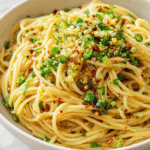
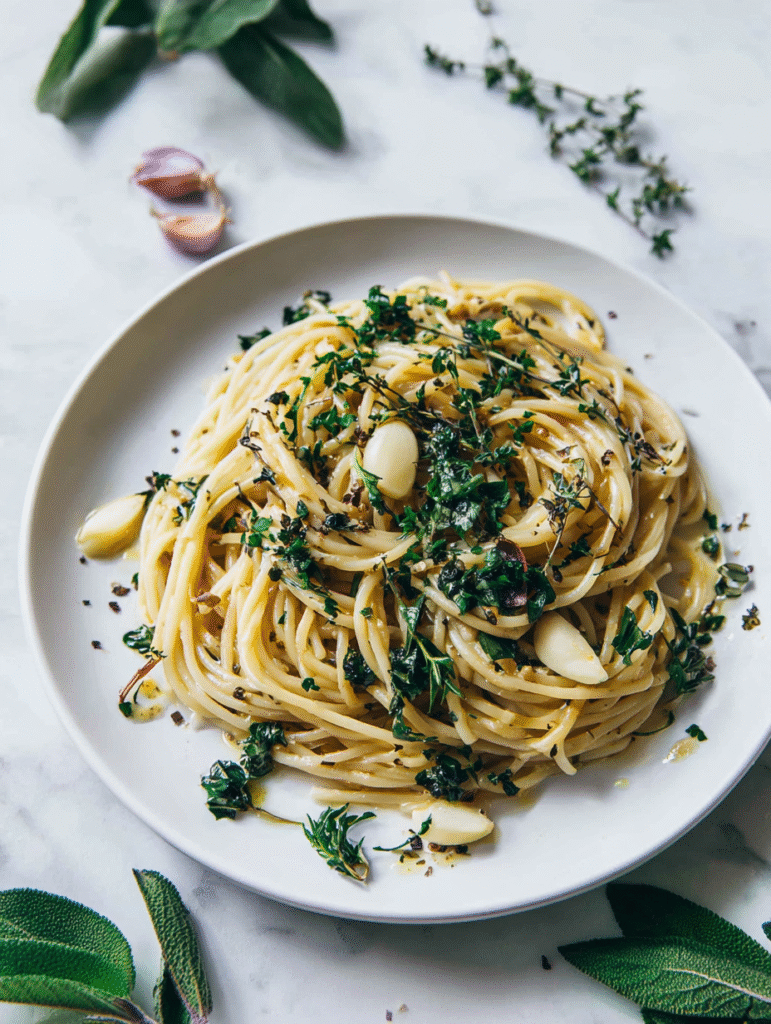
This vegan Spaghetti Aglio e Olio is more than just a quick pasta—it’s a chance to highlight the wild, ephemeral flavors of seasonal herbs and foraged garlic. I love how a handful of simple ingredients can become a vibrant, fragrant dish that feels like a walk through a spring garden or a late summer meadow.
Using foraged herbs and wild garlic transforms this humble recipe into a celebration of nature’s fleeting bounty. It’s a reminder that even the simplest meals can be full of life and richness when you pay attention to what’s around you. Plus, it’s a great way to savor the season, no matter how busy life gets.
Focusing on how a simple, humble dish like vegan Spaghetti Aglio e Olio can be a canvas for seasonal, foraged herbs and wild garlic, turning everyday comfort food into a celebration of nature’s fleeting flavors.
The inspiration behind this dish
- This dish came from a lazy weekend afternoon when I foraged some wild garlic in the park nearby. The air was thick with the scent of fresh earth and green shoots, and I couldn’t resist tossing those wild leaves into my pasta. It’s a reminder that sometimes, the best flavors come from just paying attention to what’s around you, even in the smallest moments.
- I’ve always loved how simple ingredients like garlic and olive oil can turn into something so fragrant and satisfying. When I discovered how wild garlic adds a punch of bright, almost lemony aroma, I knew I had to make it a regular part of my spring cooking. It feels like capturing a fleeting piece of nature’s bounty, right in the kitchen.
- heading
Key ingredients at a glance
- Garlic: I love smashing my garlic gently to release a nutty aroma; aim for fragrant, not burnt. Skip this step if you prefer a milder garlic vibe.
- Olive Oil: Use good-quality extra virgin oil—its grassy, peppery notes really carry this dish. If you want a milder flavor, blend in a splash of neutral oil.
- Spaghetti: I opt for al dente every time—firm to the bite and just shy of soft. If it sticks, toss in a bit more pasta water to loosen.
- Red Pepper Flakes: I sprinkle sparingly at first—they add a smoky kick, but too much can overwhelm. Adjust to your heat tolerance.
- Fresh Herbs: Wild herbs or parsley brighten the dish—chop finely for a burst of herbal freshness. Dried herbs won’t give you that vibrant aroma.
- Lemon Juice: A squeeze of lemon brightens everything—aim for a few drops, just enough to shimmer on the tongue. Skip if you prefer a subtler finish.
- Salt: I season gradually, tasting as I go—sea salt enhances all the natural flavors. Too much salt dulls the freshness of the garlic and herbs.
Spotlight on key ingredients
Garlic:
- I gently smash garlic cloves to release warm, nutty aromas; overcooking turns it bitter, so watch the color.
- Olive Oil: I prefer extra virgin for its grassy, peppery notes that coat each strand; a good quality makes all the difference.
Spaghetti & Herbs:
- Spaghetti: I aim for al dente—firm but tender—so it holds up when tossed; overcooked and mushy, it loses its bite.
- Fresh Herbs: Wild herbs or parsley add a vibrant, aromatic burst; they wilt quickly, so add at the last moment for maximum freshness.
Notes for ingredient swaps
- Dairy-Free: Use coconut milk or cashew cream instead of traditional cream for a rich, nutty flavor that’s dairy-free.
- Gluten-Free: Swap out wheat spaghetti for chickpea or lentil pasta—more protein, less gluten, same satisfying bite.
- Oil Alternatives: Try avocado oil or toasted sesame oil for a different aromatic profile—each adds a unique depth.
- Herb Variations: Fresh basil or oregano can replace wild herbs—bring a different, but equally vibrant, herbal note.
- Garlic Substitutes: Roasted garlic offers a sweeter, milder flavor—perfect if you want less punch but still aromatic.
- Vinegar or Lemon: Add a splash of vinegar or extra lemon juice for acidity—brightens the dish and cuts through richness.
- Spice Level: Use smoked paprika or cayenne instead of chili flakes—adjust heat and smokiness to your taste.
Equipment & Tools
- Large skillet: To gently cook garlic and toss pasta.
- Slotted spoon: To drain pasta without water.
- Measuring spoons: To measure garlic slices, chili, and lemon juice.
- Pasta pot: To boil spaghetti efficiently.
Step-by-step guide to vegan Spaghetti Aglio e Olio
- Gather all your equipment: a large skillet, slotted spoon, measuring spoons, and a pasta pot. Boil water over high heat, adding a generous pinch of salt. Cook spaghetti until just al dente, about 8-10 minutes, then drain, saving a cup of pasta water.
- While pasta cooks, peel and thinly slice 4-6 cloves of garlic. In the skillet, heat 3-4 tablespoons of good-quality olive oil over medium-low heat (~70°C / 160°F). Add garlic slices and cook gently, stirring often, until fragrant and lightly golden, about 2-3 minutes—avoid burning to keep it sweet and nutty.
- Once garlic hits the right color, turn heat to low. Add a pinch of red pepper flakes for smoky heat—about ¼ teaspoon, more if you like it spicy. Toss in a handful of chopped wild herbs or parsley for freshness. Squeeze in half a lemon for brightness, stirring to combine.
- Add cooked spaghetti directly to the skillet. Toss vigorously to coat all strands in garlic oil mixture. If it seems dry, add a splash of reserved pasta water, a tablespoon at a time, until glossy and well coated. Cook together for 1-2 minutes to meld flavors.
- Taste and adjust seasoning: more salt if needed, extra lemon juice for zing, or a pinch more chili for heat. The pasta should shimmer with fragrant oil, with the garlic evenly distributed and herbs vibrant.
- Remove from heat. Let rest for 1-2 minutes to settle flavors. Plate immediately, garnishing with a few extra herbs or a drizzle of olive oil for shine. Serve hot, with a crack of black pepper if desired.
Let the pasta sit for 1-2 minutes after plating to allow flavors to settle. Finish with a drizzle of olive oil or extra herbs for presentation and aroma. Serve immediately while fragrant and warm.
How to Know It’s Done
- Garlic is golden and fragrant, not burnt or bitter.
- Pasta is al dente, with a slight bite.
- Oil is glossy and coats the noodles evenly.
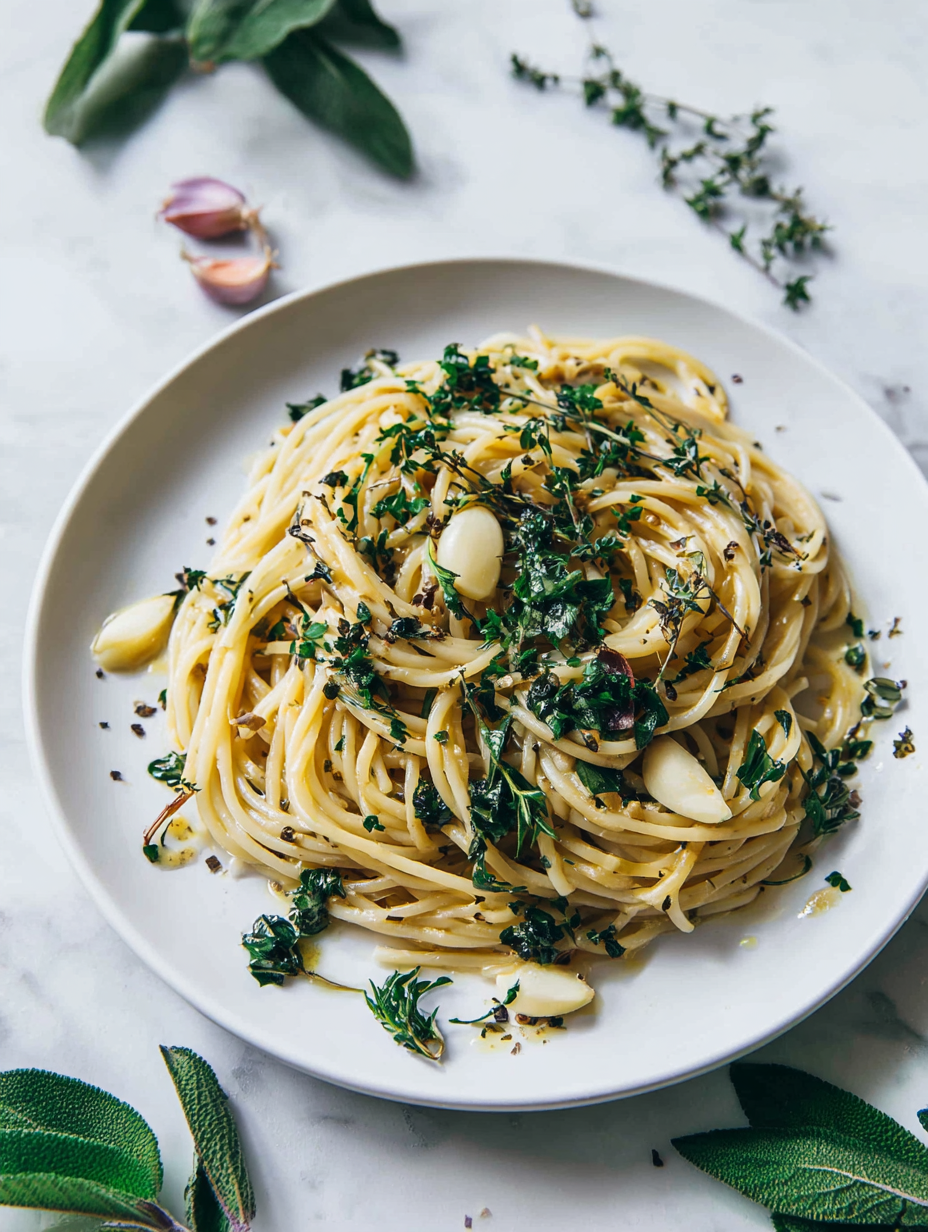
Vegan Spaghetti Aglio e Olio with Foraged Herbs
Ingredients
Equipment
Method
- Bring a large pot of salted water to a boil. Add spaghetti and cook until just al dente, about 8-10 minutes. Drain, reserving a cup of pasta water, and set aside.
- While the pasta cooks, peel and thinly slice the garlic cloves. Place a large skillet over medium-low heat and add the olive oil. Once warm, add the sliced garlic, gently stirring as it begins to smell fragrant and turns a light golden color, about 2-3 minutes.
- Add a pinch of red pepper flakes to the skillet, stirring briefly to distribute the heat, and cook for another 30 seconds until the flakes release their smoky aroma.
- Squeeze the juice of half a lemon into the skillet and stir to brighten the fragrant oil.
- Add the drained spaghetti directly into the skillet, tossing vigorously to coat each strand in the garlic oil mixture. If the pasta looks dry, add a splash of the reserved pasta water, a tablespoon at a time, until the noodles are glossy and well coated.
- Sprinkle the chopped wild herbs or parsley over the pasta and toss again to distribute evenly, preserving their bright aroma.
- Taste the dish and season with sea salt as needed. Add more lemon juice or chili flakes if you prefer a brighter or spicier flavor.
- Remove the skillet from heat and let sit for about a minute. Transfer the pasta to serving plates, drizzling with a little extra olive oil or herbs if desired.
- Serve immediately while fragrant and warm, enjoying the vibrant colors and fresh herbal aroma.
Pro tips for perfect Aglio e Olio
- Gentle heat: Cook garlic over low heat (~70°C / 160°F) to release aroma without burning, ensuring a sweet, nutty flavor.
- Pasta water: Save a cup before draining; it’s perfect for loosening the sauce and adding a silky sheen.
- Timing garlic: Watch for golden edges, not brown, to keep that fragrant, mellow quality—set a timer if needed.
- Herb addition: Toss fresh herbs in at the end to preserve their vibrant aroma and bright flavor, avoiding wilting.
- Oil sheen: Use high-quality olive oil; it should shimmer and coat the noodles evenly, coating each strand in flavor.
- Spice control: Add chili flakes gradually; start with a pinch, then adjust to your preferred heat level for balanced spice.
- Rest briefly: Let the pasta sit for a minute after tossing—this helps flavors meld and prevents sticking.
Common mistakes and how to fix them
- FORGOT to watch garlic, it burns quickly—reduce heat if it starts to brown too fast.
- DUMPED pasta water without tasting—save some to loosen the sauce if needed.
- OVER-TORCHED garlic—remove from heat sooner for a sweet, nutty aroma, not bitter.
- MISSED salt balance—add gradually and taste to enhance natural flavors, avoid dullness.
Quick fixes and pantry swaps
- When garlic burns, splash in a bit of water to cool and mellow its aroma.
- If pasta sticks, toss in a splash of olive oil and stir gently to loosen.
- Splash some lemon juice when oil seems too dull or heavy—adds brightness instantly.
- Patch over under-seasoned pasta with a pinch more salt or chili flakes for balanced flavor.
- Shield garlic from direct heat—use a lower flame or remove pan early to prevent bitterness.
Prep, store, and reheat tips
- Prepare all ingredients in advance—slice garlic, chop herbs, and measure spices—so everything is ready to toss together quickly, preserving freshness and aroma.
- Cook the pasta al dente, then rinse briefly with cold water and store in an airtight container in the fridge for up to 2 days; reheat gently to avoid mushiness.
- Store the garlic oil mixture separately in a sealed jar for up to 3 days; it intensifies over time, so use within that window for best flavor.
- Reheat in a skillet over low heat, adding a splash of water or reserved pasta water to revive gloss and prevent sticking, until fragrant and hot.
- Sensory note: reheated pasta should shimmer with a fragrant, slightly oily coat, and garlic aroma should be fresh, not burnt.
Top questions about vegan Spaghetti Aglio e Olio
1. Why is olive oil so important here?
Use good-quality extra virgin olive oil for the best flavor—it’s the base of this dish. Skip cheap oils that can taste flat or greasy.
2. How do I cook garlic so it doesn’t burn?
Cooking garlic gently over low heat releases its nutty aroma without burning, which makes the dish fragrant and sweet.
3. How do I get the sauce to cling to the pasta?
Add pasta water little by little until the sauce is glossy and coats every strand—don’t pour it all at once.
4. Can I use dried herbs instead of fresh?
Use fresh herbs or foraged greens for bright, fleeting flavor. Dried herbs won’t give the same vibrant aroma or freshness.
5. Should I add acid to the dish?
A squeeze of lemon or a splash of vinegar lifts the flavors and adds a fresh, tangy note that contrasts with the oil.
6. How do I know when the pasta is ready?
Cook the pasta until just al dente, so it has a slight bite. Overcooked pasta turns mushy and loses its texture.
7. How spicy should I make it?
Red chili flakes add smoky heat, but start with a small pinch—you can always add more if you like it spicy.
8. Should I let the pasta rest before serving?
Rest the pasta for a minute after tossing so flavors meld and it doesn’t stick together immediately.
9. What if my garlic burns?
If garlic starts to turn brown too quickly, lower the heat or remove the skillet from direct flame to prevent bitterness.
10. How do I reheat leftovers without losing flavor?
Reheat gently in a skillet with a splash of water or reserved pasta water to keep it shiny and fragrant.
This simple pasta dish is a reminder that even the humblest ingredients can shine when treated with care and attention. The fragrant garlic, bright herbs, and silky oil come together in a way that’s honest and satisfying, especially in the quiet moments of a busy day.
Whenever I make this, I feel a little more connected to the season and the small joys of cooking with what’s nearby. It’s a humble, unpolished recipe that keeps giving—whether as a quick weeknight dinner or a spontaneous walk through the garden of flavors at home.

Hi, I’m Lily Ashworth – and if you’ve ever cried over a burnt grilled cheese or served cereal for dinner after a kitchen disaster, you’re in the right place. The phrase “say a little prayer for the burnt toast” became a family joke – something we’d mutter while scraping crumbs into the sink and laughing at yet another kitchen misadventure.