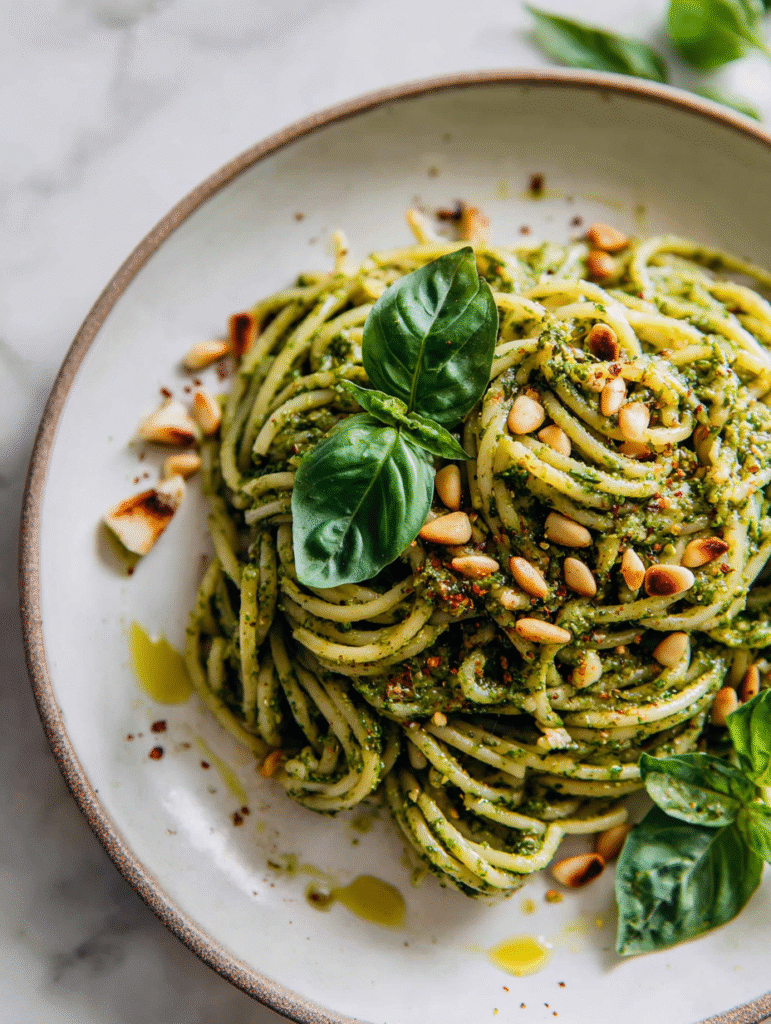
This vegan pesto pasta is a playful twist on the classic, turning it into a bright, herbaceous dish that feels like a breath of fresh air. I love how simple ingredients—basil, nuts, and a splash of lemon—come together into something so vibrant and satisfying without a hint of cheese. It’s a reminder that you don’t need dairy to get that creamy, indulgent feel.
What drew me to this recipe was the challenge of mimicking the richness of traditional pesto with entirely plant-based ingredients. The first time I blended fresh basil with toasted pine nuts and nutritional yeast, I was surprised how close it tasted to the real deal—yet somehow even better, in its own lively, zesty way. It’s perfect for those nights when you want something wholesome, quick, and bursting with flavor.
This recipe is inspired by the idea of turning a humble, everyday pasta dish into a vibrant, sensory experience that highlights the fresh, herbal brightness of homemade pesto, made entirely vegan. I love the challenge of creating a rich, creamy texture without cheese, relying on nuts and nutritional yeast—it’s a little rebellion against traditional pesto, but just as satisfying.
The story behind this recipe
- This recipe was born out of a lazy summer afternoon, when I realized I had a bunch of basil about to wilt and no cheese in the fridge. I wanted something that felt fresh, quick, and satisfying—no fuss, no dairy, just bold herbal notes and creamy texture from nuts. It became my go-to when I needed comfort without the heaviness.
- One day, I was experimenting with different nuts and herbs, trying to recreate that nostalgic, cheesy pesto vibe. The moment I blended toasted pine nuts with basil, lemon, and nutritional yeast, I knew I’d stumbled onto something special. It’s a reminder that simple ingredients, treated well, can surprise you with their magic.
- heading
- The story behind this recipe
Ingredient breakdown: key components
- Basil: I love the fragrant, peppery punch fresh basil gives; make sure to use bright green leaves, not wilted ones, for that vibrant aroma which wakes up the dish.
- Pine Nuts: Toasted pine nuts bring a rich, buttery depth and a smoky aroma; lightly toast them until golden to unlock their full flavor, then blend quickly so they don’t turn bitter.
- Nutritional Yeast: It adds a cheesy, umami note that mimics traditional cheese; sprinkle in gradually and taste as you go—too much can overpower the herbs’ freshness.
- Lemon Juice: Bright and zesty, it lifts the whole pesto; don’t skimp—freshly squeezed lemon really makes the herbal notes pop and adds a lively sparkle.
- Olive Oil: I prefer a good-quality extra virgin for its fruity, peppery finish; drizzle slowly while blending, aiming for a silky, creamy texture that coats the pasta evenly.
- Garlic: It adds a pungent, savory backbone; roast or sauté briefly before blending if you want a mellower, slightly caramelized flavor that deepens the pesto.
- Salt & Pepper: Essential for balancing; taste and adjust at the end—don’t forget, salt amplifies the herbs’ brightness, and a crack of black pepper adds a subtle spice kick.
Spotlight on key ingredients
Basil:
- I love the fragrant, peppery punch fresh basil gives; make sure to use bright green leaves, not wilted ones, for that vibrant aroma which wakes up the dish.
- Pine Nuts: Toasted pine nuts bring a rich, buttery depth and a smoky aroma; lightly toast them until golden to unlock their full flavor, then blend quickly so they don’t turn bitter.
- Nutritional Yeast: It adds a cheesy, umami note that mimics traditional cheese; sprinkle in gradually and taste as you go—too much can overpower the herbs’ freshness.
Lemon juice & Olive Oil:
- Lemon Juice: Bright and zesty, it lifts the whole pesto; don’t skimp—freshly squeezed lemon really makes the herbal notes pop and adds a lively sparkle.
- Olive Oil: I prefer a good-quality extra virgin for its fruity, peppery finish; drizzle slowly while blending, aiming for a silky, creamy texture that coats the pasta evenly.
Notes for ingredient swaps
- Nuts: Swap pine nuts for walnuts or cashews if you prefer a milder, creamier texture—both work well and are more budget-friendly.
- Herbs: Use spinach or kale instead of basil for a more subdued, earthy flavor; they’ll add a different green hue but still blend smoothly.
- Oil: Instead of olive oil, try avocado oil for a milder, buttery note—use less, as it’s richer and more intense.
- Vegan Cheese: Nutritional yeast can be replaced with a splash of miso paste for umami depth, though it’ll bring a different savory tone.
- Lemon Juice: Lime juice is a bright, slightly more tart alternative—use the same amount for a fresh twist.
- Garlic: Roasted garlic offers a mellow, caramelized flavor—add a clove or two for a sweeter, less pungent note.
- Pasta: Gluten-free or chickpea pasta works as a sturdy, protein-rich alternative—just expect a slightly different bite and color.
Equipment & Tools
- Blender: To blend the pesto ingredients into a smooth, creamy sauce.
- Large pot: For boiling and cooking the pasta evenly.
- Skillet or dry pan: To toast pine nuts until fragrant and golden.
- Colander: To drain cooked pasta efficiently.
- Measuring cups and spoons: To measure ingredients accurately.
Step-by-step guide to vegan pesto pasta
- Equip your blender with a sharp blade and a spatula to scrape down sides. Boil a large pot of salted water (about 4L/1 gallon) until it reaches a rolling boil, around 100°C/212°F. Meanwhile, toast pine nuts in a dry skillet over medium heat until golden and fragrant, about 3 minutes, stirring constantly to prevent burning.
- Add a generous pinch of salt to the boiling water. Drop in your pasta (preferably spaghetti or linguine) and cook according to package instructions, about 8-10 minutes, until al dente. Taste a strand—should be tender but with a slight bite. Drain, reserving about 1/2 cup of pasta water, and set aside.
- While pasta cooks, blend the pesto: in your blender, combine 1 cup fresh basil leaves, 1/4 cup toasted pine nuts, 2 tablespoons nutritional yeast, the juice of half a lemon, 2 cloves garlic, and a pinch of salt. Pulse a few times, then slowly drizzle in 3-4 tablespoons extra virgin olive oil, blending until smooth and creamy. Taste and adjust seasoning as needed.
- In a large mixing bowl, toss the hot pasta with the pesto. Add a splash of reserved pasta water to loosen the sauce if it feels too thick. Mix thoroughly until each strand is coated and glossy. The heat from the pasta will help the pesto cling beautifully.
- Check the pasta for doneness: it should be coated evenly, vibrant green, and smell fragrant with herbal and nutty notes. The sauce should be velvety and cling to the noodles without pooling excessively. If the pesto looks too thick, add a little more pasta water and stir until silky.
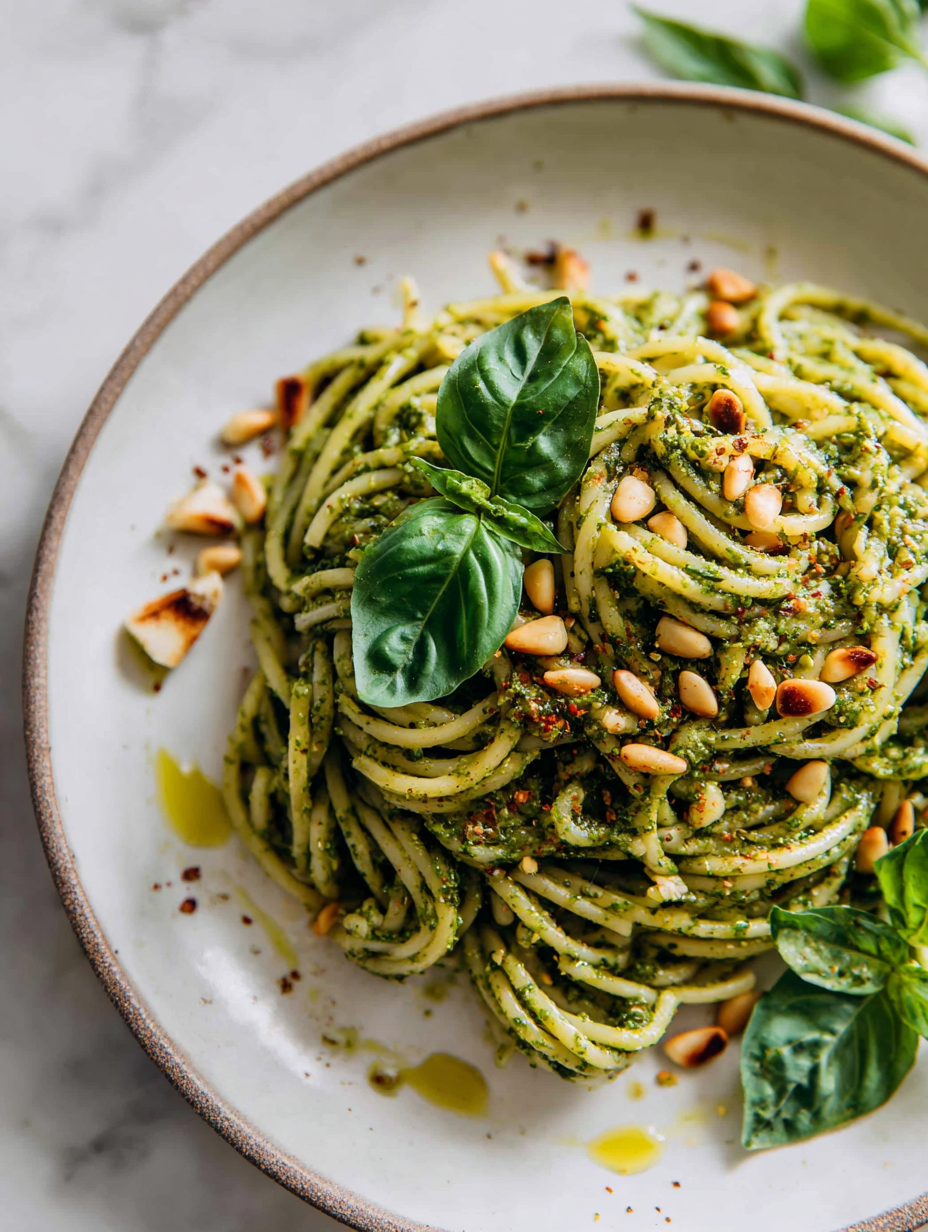
Serve the pasta immediately, garnished with extra basil leaves or a drizzle of olive oil. Toss gently to combine flavors. Enjoy while warm for the best herbaceous aroma and creamy texture.
How to Know It’s Done
- Pasta is al dente, with a slight bite when tasted.
- Pesto is bright, herbaceous, and silky, not greasy or grainy.
- Pasta is evenly coated and shiny, with a fresh, vibrant green color.
Vegan Pesto Pasta
Ingredients
Equipment
Method
- Bring a large pot of salted water to a rolling boil. Meanwhile, toast pine nuts in a dry skillet over medium heat until golden and fragrant, about 3 minutes, stirring constantly.
- Cook the pasta in the boiling water according to package instructions until al dente, about 8-10 minutes. Drain the pasta in a colander, reserving about 1/2 cup of pasta water, and set aside.
- Place the fresh basil, toasted pine nuts, nutritional yeast, lemon juice, and garlic in your blender. Pulse a few times to combine, then slowly drizzle in the olive oil while blending until the pesto is smooth, bright green, and creamy. Taste and season with salt and pepper as needed.
- Transfer the cooked pasta to a large mixing bowl. Add the pesto and toss thoroughly to coat each strand evenly. Use a splash of the reserved pasta water if the sauce feels too thick, stirring until silky.
- Check the pasta for doneness: it should be coated in a vibrant green, fragrant pesto with a silky texture. Adjust seasoning if needed by adding more salt, pepper, or lemon juice.
- Serve immediately, garnished with extra basil leaves or a drizzle of olive oil if desired. Enjoy the fresh, herbaceous flavors in every bite!
Pro tips for perfect vegan pesto
- Toast pine nuts until golden to enhance their rich, smoky aroma.
- Blend pesto just until smooth—over-blending can warm and thin the sauce.
- Use pasta water to loosen the pesto—starchy water adds silkiness and helps coating.
- Taste and adjust lemon and salt last—brighten flavors without overpowering herbs.
- Keep an eye on garlic—roast or sauté for a mellow, caramelized sweetness that deepens flavor.
- Chill basil before blending—keeps it vibrant and prevents browning during the process.
- Drizzle olive oil slowly—aim for a silky, velvety sauce that coats every noodle evenly.
Common mistakes and how to fix them
- FORGOT to taste and adjust seasoning before serving — always taste to balance flavors.
- DUMPED the pasta water down the drain — save some to loosen the pesto if needed.
- OVER-TORCHED the pine nuts — toast over medium heat, watch closely to prevent bitterness.
- MISSED the final toss — combine pasta and pesto off heat for a glossy, vibrant coating.
Quick fixes and pantry swaps
- If sauce is grainy, splash in hot pasta water and blend again quickly.
- When pesto turns too thick, add a splash of lemon juice for brightness.
- Splash olive oil if pesto feels too stiff or dry—creates a silkier coat.
- Patch over-salted pesto with a squeeze of lemon or a handful of fresh basil.
- Shield from browning by storing pesto in a layer of oil in an airtight container.
Prep, store, and reheat tips
- You can prep the pesto up to 2 days ahead; store in an airtight container in the fridge, where it stays vibrant and fresh, with a bright, herbal aroma.
- Cooked pasta can be refrigerated for 1-2 days. Toss with a little olive oil to prevent sticking and keep the texture from drying out.
- For longer storage, freeze pesto in small portions—ice cube trays work well. It keeps for up to a month, with a slightly more subdued herb scent upon defrosting.
- Reheat pasta gently in a hot skillet or microwave, adding a splash of water or olive oil to revive the creamy texture. Expect a fresh, bright aroma with a hint of nuttiness as you reheat.
Top questions about vegan pesto pasta
1. Can I use dried basil instead of fresh?
Use fresh basil for the brightest flavor and aroma. Dried basil won’t give the same vibrant punch.
2. Can I substitute pine nuts?
Yes, you can swap pine nuts for walnuts or cashews. They each bring a different richness and texture.
3. My pesto is too thick—what should I do?
Adding a bit of water or extra olive oil can loosen the sauce if it’s too thick or sticky.
4. How long can I store leftovers?
Refrigerate leftover pesto in a sealed container for up to 2 days to keep it fresh and vibrant.
5. How do I reheat vegan pesto pasta?
To reheat, gently warm the pasta in a skillet or microwave, adding a splash of water to restore creaminess.
6. Can I add more lemon to the pesto?
For a tangier flavor, add a splash of lemon juice just before serving. It brightens up the herbs.
7. Can I use different pasta types?
Use gluten-free or chickpea pasta for a protein boost or dietary needs. They hold sauce well and add texture.
8. My pesto tastes bitter—what went wrong?
If your pesto tastes bitter, toast the nuts less or blend in a bit more lemon or nutritional yeast to balance flavors.
9. Does the oil matter for flavor?
Use a good-quality olive oil for richer flavor and better texture—avoid cheap or flavored oils that overpower.
10. Can I use roasted garlic?
Add roasted garlic for a mellow, caramelized sweetness that deepens the pesto’s flavor profile.
This vegan pesto pasta is a little reminder that simplicity can shine so brightly, especially this season. The fresh basil, zesty lemon, and rich nuts make it feel like a celebration of fresh, honest flavors. It’s the kind of dish that sneaks into your weeknights and lingers in your memory.
In a world full of quick fixes and fleeting trends, this recipe asks for a moment to enjoy the process and the pure, vibrant result. It’s a humble dish that’s rooted in honest ingredients, yet somehow feels like a small achievement each time I make it. That’s enough reason to keep coming back to it.

Hi, I’m Lily Ashworth – and if you’ve ever cried over a burnt grilled cheese or served cereal for dinner after a kitchen disaster, you’re in the right place. The phrase “say a little prayer for the burnt toast” became a family joke – something we’d mutter while scraping crumbs into the sink and laughing at yet another kitchen misadventure.