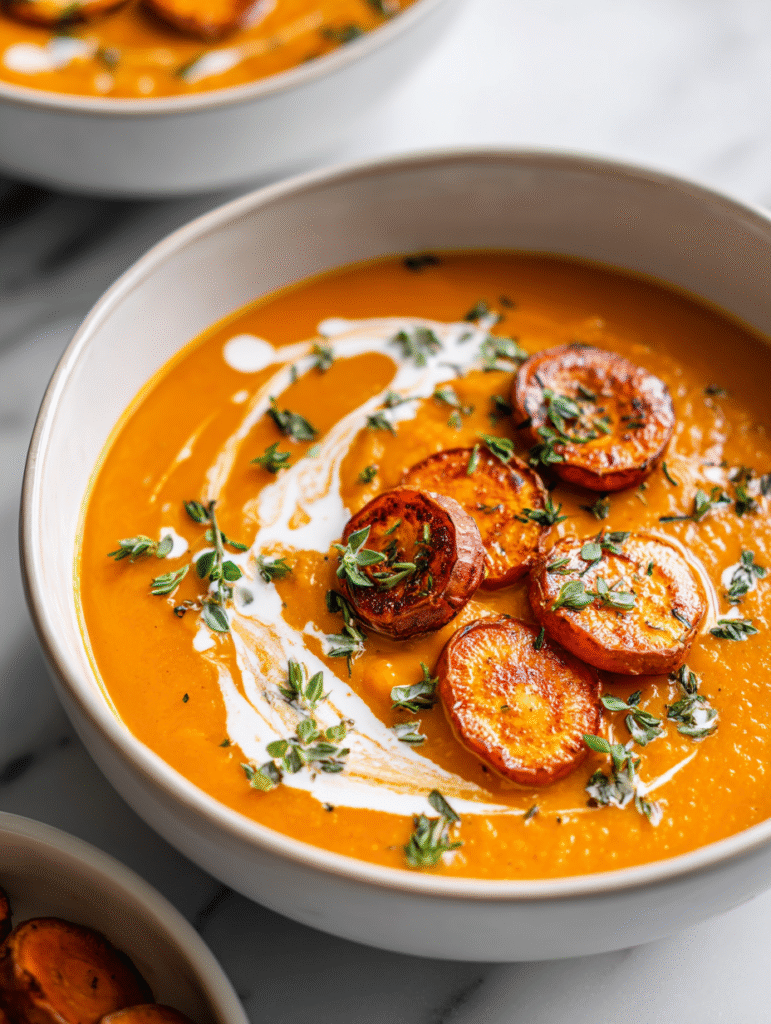
This sweet potato carrot soup is my go-to when I want something warm and satisfying, but with a little smoky twist that lifts it beyond the usual veggie purée. I love roasting the sweet potatoes and carrots until they’re caramelized and fragrant, then blending in a splash of smoked paprika that adds depth without overpowering that natural sweetness. It’s a simple dish, but the flavors feel surprisingly complex and comforting, especially on those chilly evenings when you need something cozy.
What really makes this soup special is how forgiving it is — a little bit of this, a dash of that, and it still turns out luscious and balanced. I often make a big batch to keep in the fridge, because the flavors deepen overnight and the smoky notes become even more pronounced. Plus, roasting the veggies caramelizes their sugars, giving each spoonful a hint of sweetness that’s perfectly complemented by the smoky paprika. It’s honest cooking, the kind that feels like a warm hug after a long day.
Focusing on how the natural sweetness of roasted sweet potatoes and carrots can be enhanced with a hint of smoked paprika, creating a soup that feels both cozy and unexpectedly smoky, perfect for chilly evenings when comfort food needs a little extra depth.
Unexpected smoky sweetness
- This soup reminds me of my grandmother’s kitchen, where roasted veggies filled the air with a sweet, smoky aroma that lingered long after dinner.
- I find a quiet joy in blending this soup until it’s velvety smooth, the warmth spreading through me with each spoonful.
- There’s a nostalgic comfort in the simplicity of roasting carrots and sweet potatoes, letting their natural sugars shine without fuss.
- Sometimes I add a dash of hot sauce at the end, just to spark a little chaos in the cozy sweetness.
- Making this soup feels like a small act of self-care, turning humble ingredients into something nourishing and deeply satisfying.
Unexpected smoky sweetness
This soup was born out of a lazy weekend afternoon when I had a bunch of sweet potatoes and carrots sitting in the fridge, looking a little neglected. I wanted something warm and filling but with a twist — I remembered how roasting those root vegetables brings out their natural sweetness and adds a subtle depth. Blending in a bit of smoked paprika felt like the perfect way to build a smoky, cozy flavor without needing any fancy ingredients. It’s become a kind of comfort ritual, especially on days when I need something honest and nourishing.
Historical and Cultural Tidbits
- Sweet potatoes and carrots have been staples in indigenous diets for centuries, valued for their natural sweetness and versatility.
- The combination of sweet potatoes and carrots became popular in European cuisine during the 20th century, especially in comforting soups and stews.
- Roasting root vegetables to enhance their sweetness dates back to ancient cooking methods, where caramelization was accidental but cherished.
- In many cultures, orange-colored vegetables like carrots and sweet potatoes symbolize abundance and good health, often featured in seasonal feasts.
Ingredient breakdown: key components
- Sweet potatoes: I love how their natural sweetness becomes richer when roasted, turning into a velvety base. Swap with butternut squash if you want a milder flavor, but roast until deep amber for that caramelized kick.
- Carrots: Their bright, slightly earthy sweetness pairs perfectly with roasted, oozy edges for a smoky undertone. Use parsnips if you want a more subtle, spicy-sweet note, but skip peeling to keep the flavor intense.
- Olive oil: I drizzle generously before roasting to help caramelize the veggies beautifully. If you prefer a lighter touch, try avocado oil for a milder, buttery finish.
- Smoked paprika: Adds that unexpected smoky depth I crave. If you want a milder flavor, paprika sweet works, but skip the smoky one for a more straightforward sweetness.
- Garlic: Roasting caramelizes the garlic slightly, giving it a mellow, nutty aroma. Fresh garlic is best, but roasted garlic will give a softer, sweeter note—try it if you want less bite.
- Vegetable broth: I use homemade or low-sodium to keep the flavor pure. For an extra depth, add a splash of apple cider vinegar or a squeeze of lemon at the end to brighten it up.
- Cream or coconut milk: I swirl in a bit at the end for creaminess, but for dairy-free, coconut milk adds a subtle tropical hint and keeps the soup lush and silky.
Spotlight on key ingredients
Sweet potatoes:
- I love how their natural sweetness becomes richer when roasted, turning into a velvety base. Swap with butternut squash if you want a milder flavor, but roast until deep amber for that caramelized kick.
- Carrots: Their bright, slightly earthy sweetness pairs perfectly with roasted, oozy edges for a smoky undertone. Use parsnips if you want a more subtle, spicy-sweet note, but skip peeling to keep the flavor intense.
Olive oil & smoked paprika:
- Olive oil: I drizzle generously before roasting to help caramelize the veggies beautifully. If you prefer a lighter touch, try avocado oil for a milder, buttery finish.
- Smoked paprika: Adds that unexpected smoky depth I crave. If you want a milder flavor, paprika sweet works, but skip the smoky one for a more straightforward sweetness.
Notes for ingredient swaps
- Sweet potatoes: I love their rich, caramelized sweetness after roasting. Swap with butternut squash for a milder, nutty flavor, but roast until deeply golden for that same depth.
- Carrots: Their earthy, bright flavor balances the sweetness. Use parsnips if you want a spicier, more complex note; just keep in mind they’re a touch earthier and less sweet.
- Olive oil: I drizzle generously before roasting for a golden, crispy edge. If you prefer a subtler taste, try avocado oil—less fruity, more buttery.
- Smoked paprika: It’s my secret for that smoky layer. If you want pure sweetness, skip it and add an extra pinch of cinnamon or ginger instead.
- Garlic: Roasted garlic adds a mellow, nutty aroma. Fresh garlic keeps it punchy, but roasted garlic offers a softer, sweeter flavor—perfect if you want less bite.
- Vegetable broth: I use homemade or low-sodium to keep it pure. For a richer flavor, add a splash of apple cider vinegar or lemon juice at the end to brighten the soup.
- Coconut milk: I swirl it in for a silky finish, especially if dairy isn’t an option. For a lighter touch, use a splash of almond milk or skip altogether, but expect less creaminess.
Equipment & Tools
- Oven: Roast the vegetables to deepen flavor and caramelize sugars.
- Baking sheet: Hold and evenly roast the veggies.
- Large pot: Cook garlic and simmer the soup.
- Immersion blender or regular blender: Puree the soup to a smooth consistency.
- Knife and cutting board: Chop the vegetables uniformly for even roasting.
- Measuring cups and spoons: Ensure accurate broth, oil, and seasoning quantities.
Step-by-step guide to sweet potato carrot soup
- Preheat your oven to 200°C (390°F). Gather a baking sheet, a large knife, and a roasting pan. Line the sheet with parchment for easy cleanup.
- Peel and roughly chop 2 large sweet potatoes into 2-inch chunks, about 4 cups. Toss with 2 tbsp olive oil and a pinch of salt.
- Peel and chop 3 large carrots into similar-sized pieces. Toss with 1 tbsp olive oil, a dash of pepper, and a sprinkle of smoked paprika if you like extra smokiness.
- Spread the sweet potatoes and carrots on the prepared baking sheet. Roast for 35-40 minutes, flipping halfway, until edges are caramelized and fragrant. They should be tender when poked with a fork.
- While roasting, mince 3 garlic cloves. In a large pot (around 4 liters), heat 1 tbsp olive oil over medium heat. Add garlic and cook until fragrant, about 30 seconds. Do not let it burn—if it turns dark, start over.
- Once veggies are roasted, add them to the pot. Pour in 4 cups vegetable broth. Bring to a simmer over medium heat, about 10 minutes. The aroma should be sweet and smoky.
- Use an immersion blender directly in the pot or transfer the mixture to a blender in batches. Blend until smooth and velvety. If the soup is too thick, thin with a splash of broth or water. Check for seasoning, adding salt if needed.
- Taste for balance—if you want more depth, stir in a teaspoon of apple cider vinegar or lemon juice. For creaminess, swirl in 1/4 cup coconut milk or cream. Warm through for another 2 minutes.
- Rest the soup for 5 minutes off the heat. Serve in bowls, garnished with a drizzle of olive oil or a sprinkle of fresh herbs if desired. The soup should be silky, with a smoky-sweet aroma and a vibrant orange hue.
Let the blended soup rest for 5 minutes off heat to settle. Serve hot, garnished with a drizzle of olive oil or a sprinkle of herbs. Enjoy the silky texture and smoky aroma.
How to Know It’s Done
- Carrots and sweet potatoes are caramelized and fragrant, with edges slightly darkened.
- The soup is smooth and velvety after blending, no lumps or raw veggie chunks.
- A gentle simmer in the broth gives off a sweet, smoky aroma, indicating flavors are melded.
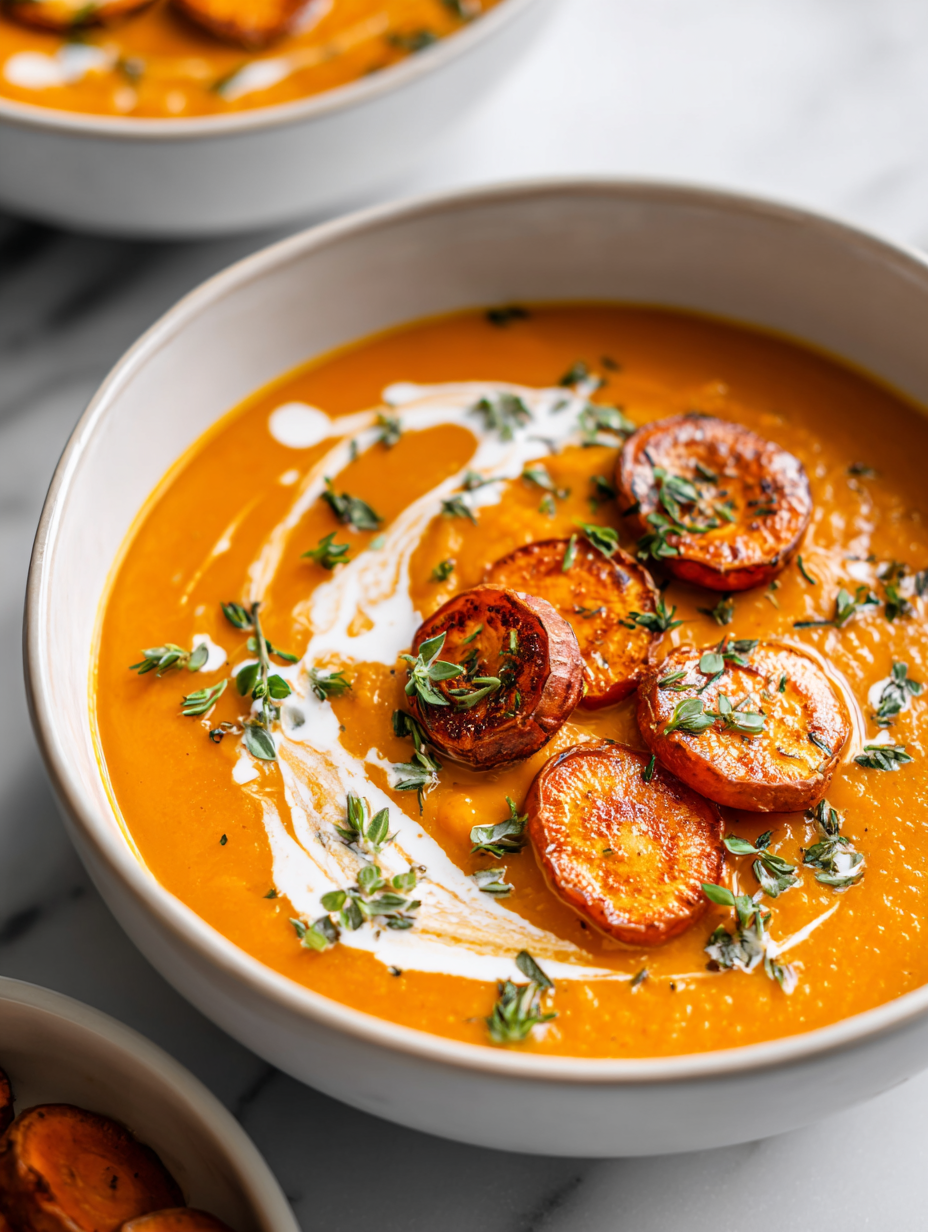
Smoky Roasted Sweet Potato and Carrot Soup
Ingredients
Equipment
Method
- Preheat your oven to 200°C (390°F). Line a baking sheet with parchment paper.
- Peel and chop the sweet potatoes into roughly 2-inch chunks, then toss them with a tablespoon of olive oil and a pinch of salt.
- Peel and chop the carrots into similar-sized pieces, then toss with a teaspoon of olive oil, a dash of pepper, and a sprinkle of smoked paprika for extra smoky flavor.
- Spread the sweet potatoes and carrots evenly on the prepared baking sheet and roast for about 35-40 minutes, flipping halfway, until the edges are caramelized and the vegetables are tender when pierced with a fork. The aroma should be sweet and smoky.
- While the vegetables roast, heat a tablespoon of olive oil in a large pot over medium heat. Add the minced garlic and cook until fragrant, about 30 seconds, until it turns lightly golden and smells nutty.
- Once the roasted vegetables are ready and cooled slightly, transfer them to the pot with the garlic. Pour in the vegetable broth and bring to a gentle simmer for about 10 minutes to meld the flavors.
- Use an immersion blender or transfer the mixture to a blender in batches, then blend until completely smooth and velvety. Be careful blending hot liquids—start on low speed.
- Return the pureed soup to the pot (if using a blender) and stir in the coconut milk for creaminess. Season with salt and pepper to taste, and add a splash of apple cider vinegar or lemon juice to brighten the flavor. Warm through for another 2 minutes.
- Taste and adjust seasoning as needed. The soup should be silky, with a smoky aroma and a vibrant orange hue. Serve hot, garnished with a drizzle of olive oil or fresh herbs if desired.
Notes
Pro tips for perfect soup
- Use high heat during roasting to encourage caramelization and deepen flavors.
- Keep an eye on the vegetables; edges should be golden and slightly charred for smoky intensity.
- When blending, start on low speed to avoid splattering, then increase to achieve silky smoothness.
- Taste and adjust seasoning after blending—sometimes a splash of vinegar brightens the entire bowl.
- If the soup thickens too much after blending, thin with hot broth, stirring gently until creamy.
- For a richer flavor, add a small knob of butter or a swirl of good olive oil right before serving.
- Roast vegetables until deeply caramelized—this step unlocks their natural sweetness and smoky notes.
Common mistakes and how to fix them
- FORGOT to check oven temperature → Ensure oven is calibrated for accurate roasting.
- DUMPED vegetables directly into blender → Let veggies cool slightly before blending to avoid splattering.
- OVER-TORCHED garlic → Burned garlic tastes bitter; add later or cook on lower heat.
- SKIPPED seasoning adjustments → Taste and adjust salt or acidity before serving.
Quick fixes for soup success
- If sauce is too thick, splash in hot broth and stir until it shimmers.
- When veggies stick, sprinkle with a little water and cover briefly to loosen.
- Splash lemon juice if soup tastes flat or dull after blending.
- Patch burnt garlic by removing it and adding fresh garlic at the end.
- Shield delicate herbs with a light drizzle of oil if they wilt too quickly.
Prep, store, and reheat tips
- Peel and chop the sweet potatoes and carrots a day in advance; store in an airtight container in the fridge to keep them fresh and prevent browning, ensuring they stay bright and firm until roasting.
- Roasted vegetables can be made up to 2 days ahead. Reheat in a 180°C (350°F) oven until warmed through, or gently in a microwave, until fragrant and tender again.
- Soup can be made a day ahead and kept in the fridge for up to 3 days. Store in a sealed container, and reheat gently over low heat, stirring occasionally, until steaming and fragrant.
- Reheating will deepen the smoky sweetness. Expect the flavors to become more integrated, with a slightly thicker texture. Adjust with a splash of broth or water for desired consistency.
- For longer storage, freeze the cooled soup in portions for up to 3 months. Thaw overnight in the fridge and reheat, checking for taste and adjusting seasoning as needed, until hot and silky.
Top questions about sweet potato carrot soup
1. Why roast the vegetables instead of boiling?
Roasting sweet potatoes and carrots brings out their natural sugars, making the soup richer and more flavorful. The caramelized edges add a smoky depth that boiling can’t achieve.
2. Can I skip smoked paprika?
Adding smoked paprika gives a surprising smoky layer that balances the sweetness. It’s like a cozy whisper of campfire in each spoonful.
3. How do I make the soup creamier?
Yes, you can blend in a splash of coconut milk or cream at the end for extra richness and a silky texture that feels indulgent.
4. What if the soup is too thick?
If the soup is too thick, thin it out with hot vegetable broth or water. The goal is a velvety, pourable consistency that coats your spoon smoothly.
5. How can I enhance the flavor after blending?
To deepen the flavor, add a splash of apple cider vinegar or lemon juice after blending. It brightens the sweetness with a fresh, zesty kick.
6. Should I use raw or roasted garlic?
Roasted garlic develops a mellow, nutty aroma that complements the sweetness beautifully. Use fresh garlic for a punch or roasted garlic for a softer note.
7. How long does the soup last in the fridge?
Store leftovers in an airtight container in the fridge for up to 3 days. Reheat gently on the stove until steaming and fragrant, stirring occasionally.
8. Can I freeze this soup?
You can freeze the soup in portions for up to 3 months. Thaw overnight in the fridge and reheat, adjusting seasoning as needed.
9. Can I use chicken broth instead?
Use a good-quality vegetable broth for a clean, pure flavor. Homemade broth adds depth, while store-bought works fine in a pinch.
10. Can I make it dairy-free?
Yes! For a vegan option, skip dairy and use coconut milk or a splash of plant-based cream. The flavor remains rich and comforting.
This soup is a reminder that simple ingredients, when roasted and treated with care, can turn into something unexpectedly rich and smoky. It feels like a warm hug on a cold day, with that perfect balance of sweetness and depth.
In the end, it’s about those small moments — peeling a roasted carrot, smelling that caramelized aroma, and knowing you’ve made something genuinely nourishing. A bowl of this can turn a regular evening into something a little more special, even if it’s just for yourself.

Hi, I’m Lily Ashworth – and if you’ve ever cried over a burnt grilled cheese or served cereal for dinner after a kitchen disaster, you’re in the right place. The phrase “say a little prayer for the burnt toast” became a family joke – something we’d mutter while scraping crumbs into the sink and laughing at yet another kitchen misadventure.