
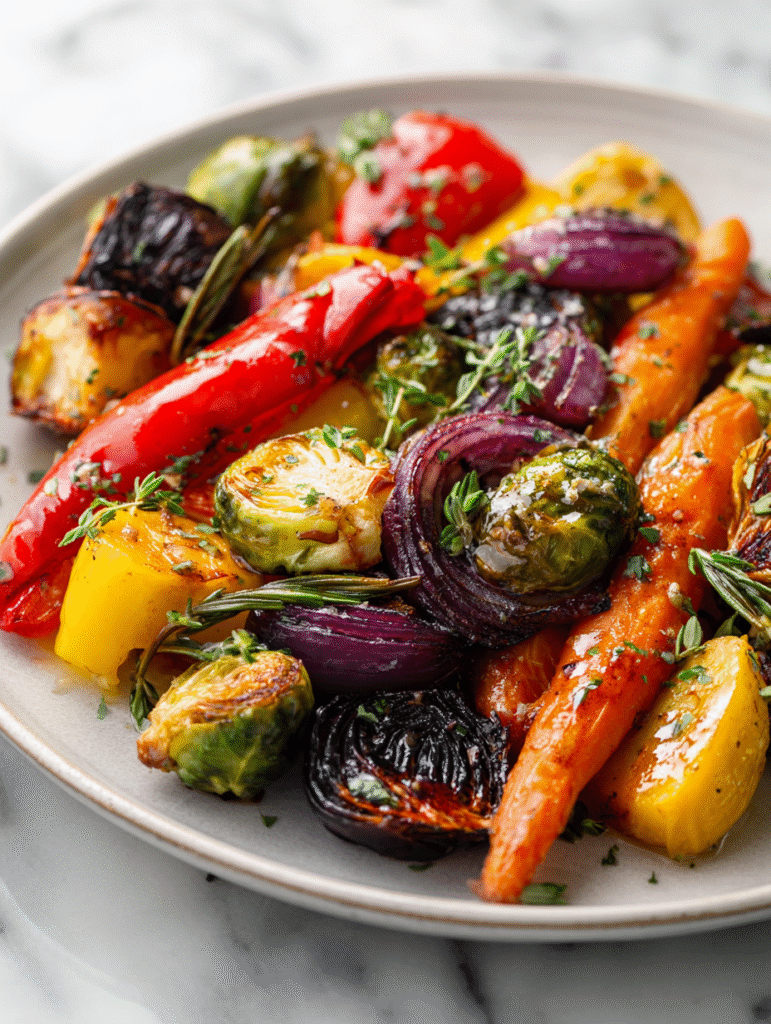
Roasting vegetables for Christmas is my way of turning up the cozy. It’s a simple act, but the caramelized edges and smoky aroma fill the kitchen with warmth. I love how these bites can transform a humble veggie into a celebration of texture and flavor. It’s a small, honest gesture—kind of like giving the season a little extra flavor.
Why I Keep Coming Back to This Roast
It’s the way these vegetables turn from humble to extraordinary—crisp, sweet, smoky, and so familiar yet new. The process is forgiving, forgiving enough to make me feel like a pro. Plus, it’s the perfect way to make use of whatever’s in the fridge, turning leftovers into a festive centerpiece.
Ingredients & Their Honest Roles
- Root vegetables (carrots, parsnips): Bring natural sweetness and hearty texture; peel for a smoother bite.
- Brussels sprouts: Add a smoky bitterness that balances sweetness; halve for even cooking.
- Olive oil: Helps vegetables roast evenly and adds a fruity aroma; opt for good quality.
- Fresh herbs (thyme, rosemary): Infuse the oil with fragrant herbal notes; fresh is best.
- Salt and pepper: Enhance flavors; don’t skimp on seasoning—taste as you go.
- Lemon zest or a splash of lemon juice: Brighten the entire dish with zing; adds a fresh, citrusy lift.
- Balsamic vinegar (optional): Drizzle for a sweet, smoky glaze—just a teaspoon brings depth.
Tools of the Trade for Roasting Veggies
- Baking sheet: Provides a flat surface for even roasting.
- Mixing bowl: Helps toss vegetables with oil and seasonings.
- Silicone spatula: Ensures even coating and easy turning.
- Oven thermometer: Keeps your oven temperature precise.
A Step-by-Step Guide to Perfectly Roasted Veggies
Step 1: Preheat your oven to 200°C (390°F).
Step 2: Chop your chosen vegetables into uniform pieces for even roasting.
Step 3: Toss vegetables with olive oil, salt, pepper, and your favorite herbs.
Step 4: Spread them out on a baking sheet in a single layer.
Step 5: Roast for 25-30 minutes, flipping halfway, until edges are crispy and caramelized.
Step 6: Check for doneness: vegetables should be tender inside with a smoky exterior.
Step 7: Let them rest for 5 minutes before serving to lock in flavors.
Cooking Checkpoints & Tips for Success
- Vegetables are evenly coated and no oil pools on the baking sheet.
- Edges are deep golden or slightly charred for that roasted depth.
- Vegetables are tender when pierced with a fork, but not mushy.
Common Mistakes and How to Fix Them
- Crowded pan leading to steaming instead of roasting.? Use a too-small pan → Spread vegetables on a larger sheet for even roasting.
- Vegetables steaming and not caramelizing.? Overcrowd the pan → Roast in batches if needed.
- Uneven charring.? Forget to flip halfway → Turn vegetables for uniform browning.
- Uneven cooking due to cold starts.? Use cold vegetables directly from fridge → Let them sit at room temp for 10 minutes.
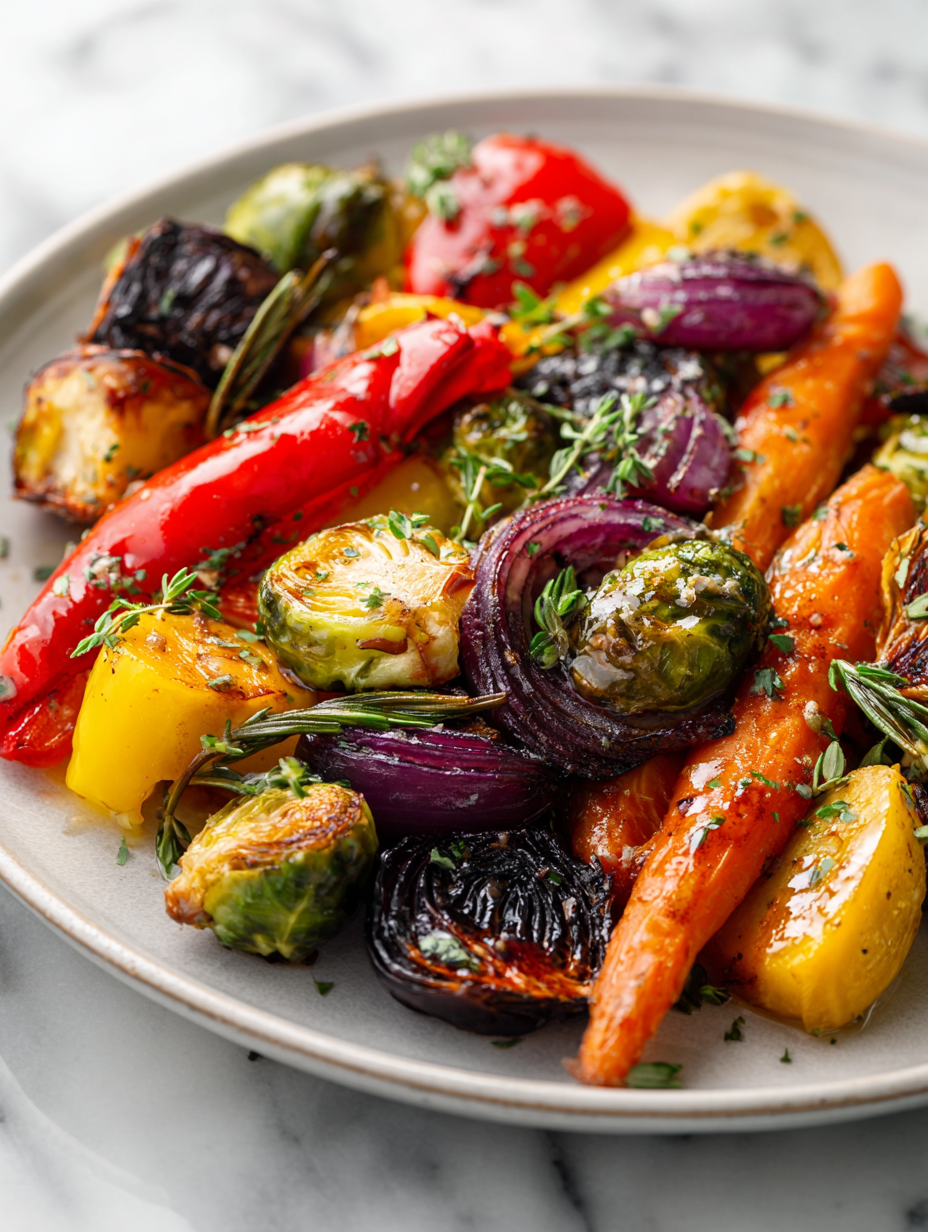
Roasted Christmas Vegetables
Ingredients
Equipment
Method
- Preheat your oven to 200°C (390°F).

- Chop the carrots and parsnips into uniform chunks, about 1 to 1.5 inches in size, and halve the Brussels sprouts for even cooking.
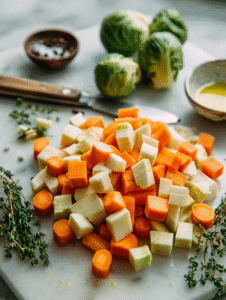
- In a large mixing bowl, toss the chopped vegetables with olive oil, chopped thyme, rosemary, salt, and black pepper until they're evenly coated and fragrant.

- Spread the seasoned vegetables in a single layer on a baking sheet, ensuring they are not crowded to promote caramelization.
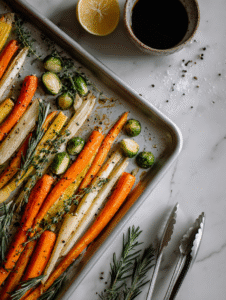
- Roast in the oven for 25 to 30 minutes, flipping halfway through, until the edges are deep golden and caramelized, and the vegetables are tender inside.

- While still warm, drizzle with balsamic vinegar if using, and sprinkle lemon zest or a splash of lemon juice over the vegetables for a bright finish.
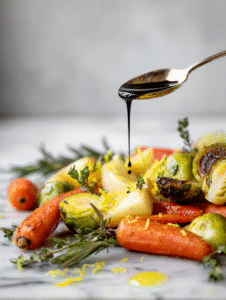
- Give everything a gentle toss with the spatula to combine flavors, then let rest for a few minutes to develop the aroma and texture.
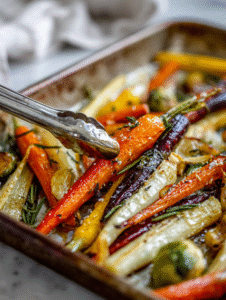
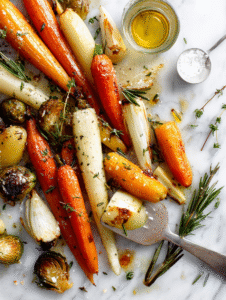
- Serve the roasted vegetables warm, showcasing their crispy edges and tender centers—a perfect festive side.
Notes

Hi, I’m Lily Ashworth – and if you’ve ever cried over a burnt grilled cheese or served cereal for dinner after a kitchen disaster, you’re in the right place. The phrase “say a little prayer for the burnt toast” became a family joke – something we’d mutter while scraping crumbs into the sink and laughing at yet another kitchen misadventure.