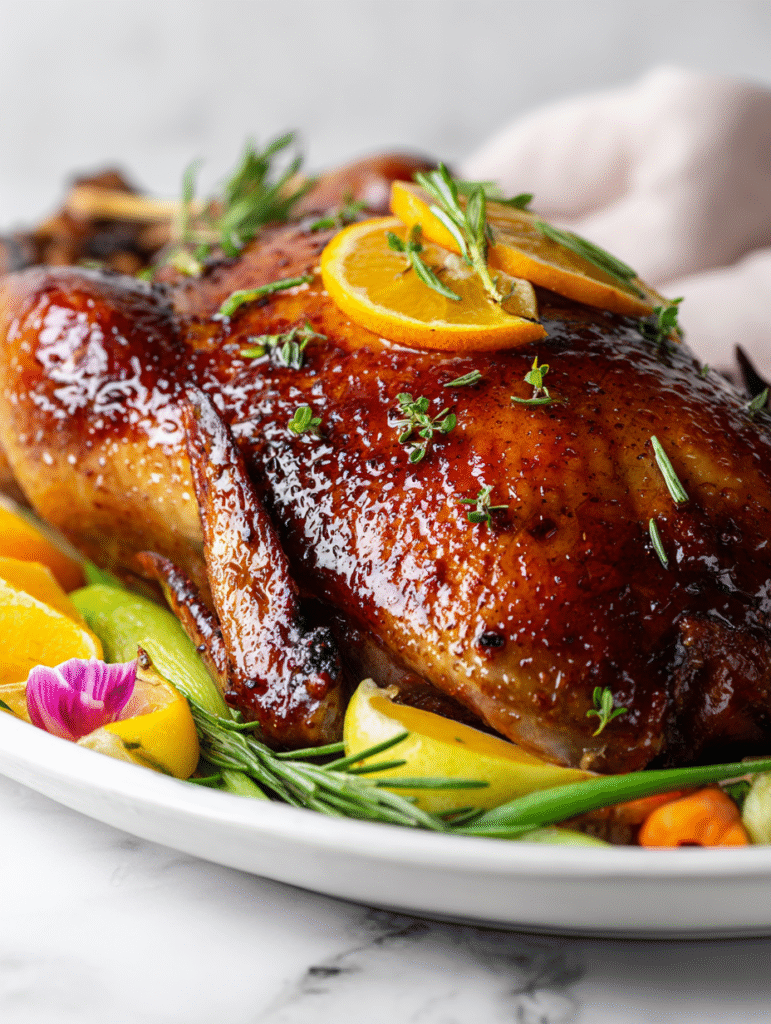
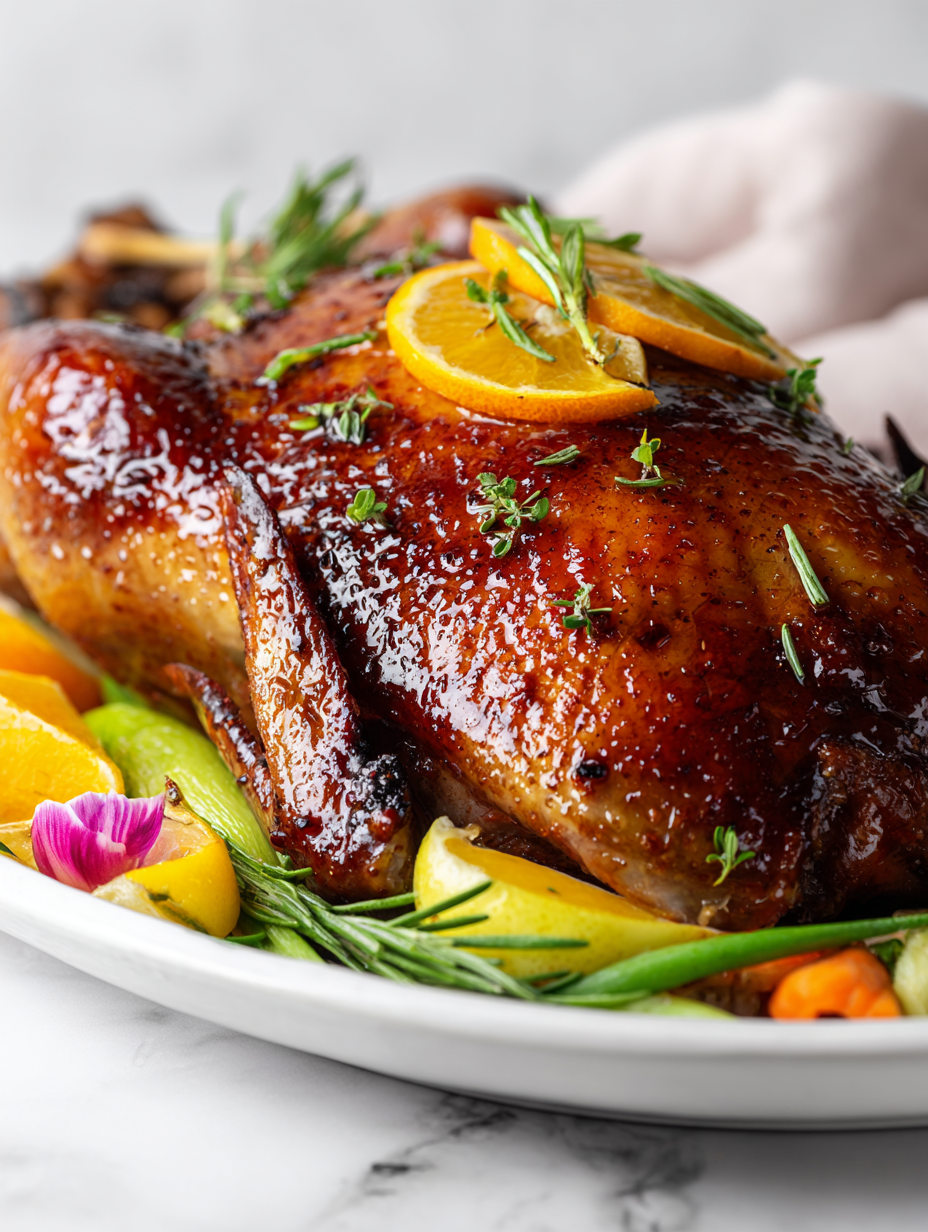
Roast duck often feels like a special treat—something you reserve for the big holidays or a fancy Sunday meal. But in my kitchen, I’ve found that it’s the unexpected citrus-herb glaze that makes this dish stand out. It cuts through the richness with a zesty punch, making the whole experience feel fresh and lively.
Why This Roast Duck Keeps Calling Me Back
The crisp skin combined with the citrus-herb zing is addictive. It’s a recipe that makes me feel connected to tradition, but with a fresh twist that keeps it exciting. Each time I cook it, I learn something new—like a perfect balance of glaze or a tweak in roasting time. It’s a dish that challenges and rewards, season after season.
Breaking Down the Key Flavors
- Duck: Rich, tender, with a wonderfully fatty skin that crisps up beautifully.
- Citrus (orange and lemon): Bright, zesty, and juicily aromatic, it cuts through the richness.
- Fresh herbs (thyme, rosemary): Earthy and fragrant, these add depth to the glaze.
- Garlic and shallots: Sautéing these brings a mellow, savory backbone.
- Honey and soy sauce: Sweet and salty, balancing the acidity and adding a smoky sheen.
- Salt and black pepper: Fundamental for seasoning, bring out all the flavors.
- Olive oil: Helps distribute the glaze and crisp the skin.
Tools of the Trade for Duck Mastery
- Roasting pan with rack: Allows fat to drain and the duck to cook evenly.
- Sharp paring knife: Scoring the skin precisely without cutting into the meat.
- Meat thermometer: Ensures perfect doneness without guesswork.
- Basting brush: Applying glaze smoothly and evenly.
Step-by-Step Roasting Guide for Holiday Duck
Step 1: Preheat your oven to 200°C (390°F).
Step 2: Score the duck skin in a crosshatch pattern, being careful not to cut into the meat.
Step 3: Season the duck generously with salt and pepper, both inside and out.
Step 4: Place the duck on a rack in a roasting pan, breast side up.
Step 5: Roast for 20 minutes, then lower the temperature to 180°C (355°F).
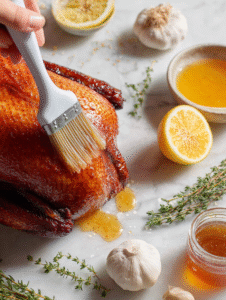
Step 6: Continue roasting for about 1 hour, basting every 20 minutes with the citrus-herb glaze.
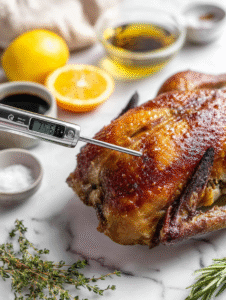
Step 7: Check the duck’s internal temperature; it should reach 75°C (165°F).
Step 8: Let the duck rest for 15 minutes before carving.
Crispy Skin and Juicy Meat: Key Cooking Checkpoints
- Look for a deep golden-brown skin that’s crackly and dry to the touch.
- Use a meat thermometer to ensure the internal temperature hits 75°C (165°F).
- Juice should run clear when you pierce the thickest part of the thigh.
Common Mistakes and How to Fix Them
- Oven too cool during roasting.? If skin isn’t crisp enough, increase oven temperature to 220°C (430°F) for the last 10 minutes.
- Excess fat rendering during cooking.? If the duck is too greasy, let it rest on paper towels after roasting.
- Overly high heat or too much glaze.? If glaze burns, cover the duck loosely with foil and reduce oven temp.
- Undercooked meat.? If meat isn’t tender, roast longer at a lower temp or cover and cook for additional 15 minutes.
Citrus-Herb Roast Duck
Ingredients
Equipment
Method
- Preheat your oven to 200°C (390°F). Place the duck on a clean work surface and score the skin in a crosshatch pattern, being careful not to cut into the meat. This helps render fat and crisp the skin.
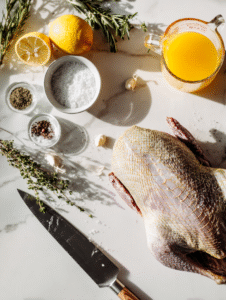
- Season the entire duck generously with salt and black pepper, rubbing it into the scored skin and inside the cavity for even flavor.
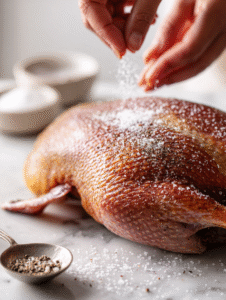
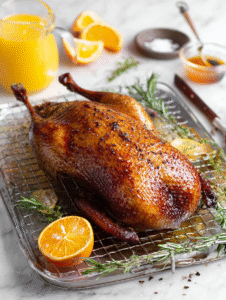
- Place the duck on a roasting rack set inside a pan, breast side up, to allow excess fat to drain away as it cooks.
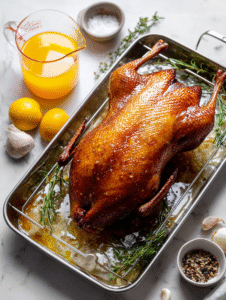
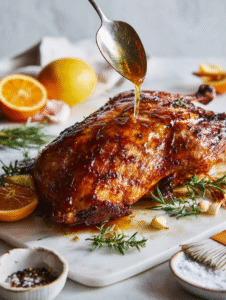
- Roast the duck for 20 minutes at 200°C, then reduce the oven temperature to 180°C (355°F). Continue roasting, basting every 20 minutes with the citrus-herb glaze, until the skin turns deep golden and crispy, about 1 hour.
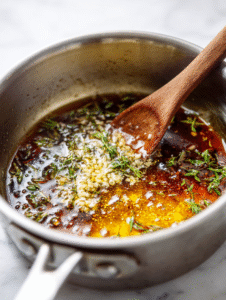
- Meanwhile, prepare the glaze by combining orange juice, lemon juice, minced garlic, thyme, rosemary, honey, soy sauce, and olive oil in a small saucepan. Bring to a gentle simmer and cook until slightly thickened, about 5 minutes.
- Once the duck skin is crispy and golden, check that the internal temperature reaches 75°C (165°F) using a meat thermometer. If needed, roast a bit longer or cover loosely with foil to finish cooking.
- Remove the duck from the oven and let it rest on the rack for 15 minutes. This allows the juices to redistribute, ensuring juicy meat with crispy skin.
- Brush the duck generously with the citrus-herb glaze, allowing it to soak into the skin and infuse extra flavor. Reapply a few times if desired.
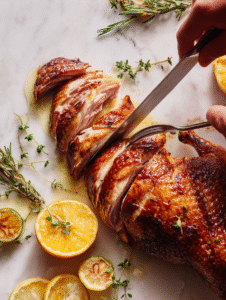
- Carve the duck into serving pieces, revealing tender, juicy meat with beautifully crisped skin. Serve immediately, ideally with additional citrus slices or herbs for garnish.

Hi, I’m Lily Ashworth – and if you’ve ever cried over a burnt grilled cheese or served cereal for dinner after a kitchen disaster, you’re in the right place. The phrase “say a little prayer for the burnt toast” became a family joke – something we’d mutter while scraping crumbs into the sink and laughing at yet another kitchen misadventure.