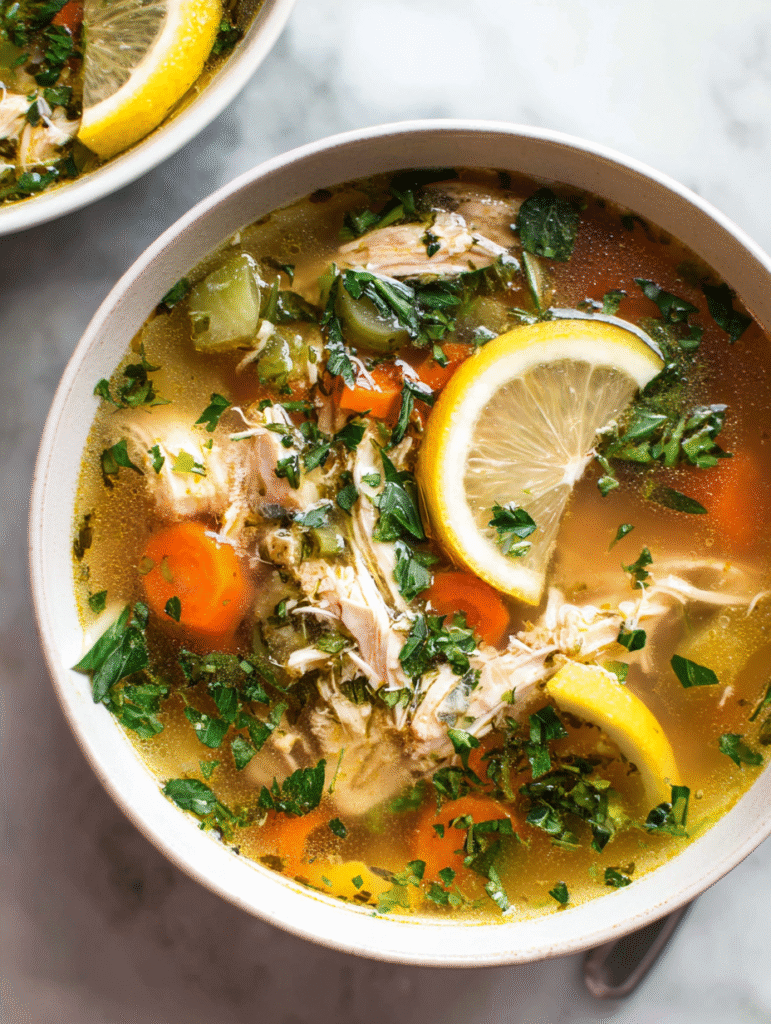
This chicken soup isn’t just a comfort food; it’s a slow-cooked, healing brew that taps into centuries of tradition. I learned it from my grandma—her secret was always in the bones, simmered long enough to release every drop of goodness. These days, I make it when I need a reset, a quiet moment, or just a really good meal that makes everything feel a little better.
Why I Keep Coming Back to This Recipe
Because it’s a tangible act of kindness. The slow simmer, the fragrant steam, the simple ingredients—each time I make it, I feel grounded. It’s what I turn to when I need a moment of peace or a reminder that nourishment is a quiet, daily act.
Inside the Ingredients of Healing Chicken Soup
- Chicken bones and skin: They release collagen and umami, turning broth silky and nourishing. Substitute with turkey bones for a different depth.
- Onion: Adds sweetness and aroma. Use shallots for a milder, more delicate flavor.
- Carrots: Sweet, earthy, and brightens the broth. Swap with parsnips for a slightly spicier note.
- Celery: Gives freshness and aromatic complexity. Leeks can be a gentle alternative.
- Fresh herbs (parsley, thyme): Herbs lift the broth with vibrant, green notes. Dried herbs work in a pinch, but fresh is best.
- Lemon: A splash brightens and awakens the flavors. Lime can add a tangy twist.
- Noodles or rice: Adds substance and comfort. Use gluten-free grains if needed.
Tools of the Trade for a Healing Broth
- Large stockpot: To hold all ingredients and sustain a slow simmer.
- Fine mesh strainer: To strain out bones, vegetables, and herbs for a clear broth.
- Wooden spoon: To skim foam and stir gently without breaking down delicate ingredients.
- Chef’s knife: For chopping vegetables and herbs with precision.
- Cutting board: A sturdy surface for prepping ingredients.
Steps to Brew Your Healing Potion
Step 1: Start by gathering a handful of fresh chicken bones and skin. They’re packed with collagen and flavor, and I swear they turn the broth into a silky, healing elixir.
Step 2: Bring a large pot—about 4 liters—to a gentle simmer. Toss in the bones, a whole onion, a couple of carrots, and a stick of celery.
Step 3: Let it simmer low and slow, uncovered, for at least 3 hours. Skim off any foam and excess fat. The smell should be rich and savory, like comfort itself.
Step 4: Strain out the solids, then add fresh vegetables, a handful of noodles or rice, and herbs like parsley and thyme.
Step 5: Simmer a bit longer until the vegetables are tender and the noodles are just right. Taste and adjust salt—this broth should be soothing and flavorful.
Step 6: Let it rest for a few minutes before serving. A warm bowl, a splash of lemon, and a crack of black pepper make it unforgettable.
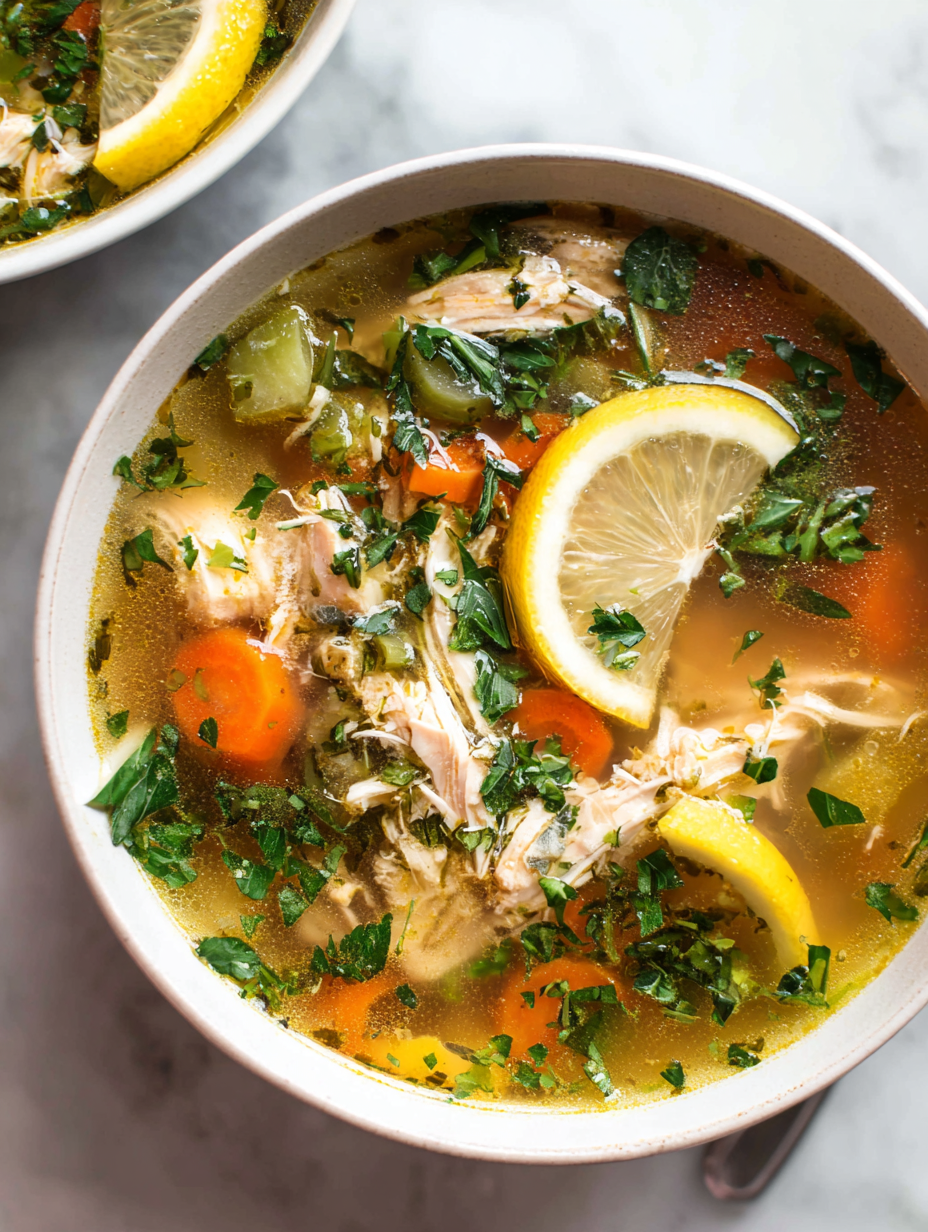
Healing Chicken Soup
Ingredients
Equipment
Method
- Place the chicken bones and skin into a large stockpot and cover with about 4 liters of cold water. Bring to a gentle simmer over medium heat, and let it cook uncovered for 10 minutes, skimming off any foam that rises to the surface and releasing a rich, savory aroma.
- Add the halved onion, chopped carrots, and chopped celery to the pot. These vegetables will infuse the broth with sweetness and depth as they cook alongside the bones.
- Reduce the heat to low and let the broth simmer gently for at least 3 hours, uncovered. During this time, occasionally skim off foam and excess fat to keep the broth clear and flavorful, while the smell fills your kitchen with comforting aromas.
- Once the broth has simmered long enough, carefully strain out the solids using a fine mesh strainer, pressing gently to extract maximum flavor. Discard the bones and vegetables, and return the clear broth to the pot.
- Add the fresh parsley and thyme to the strained broth. Bring it back to a gentle simmer and cook for another 15 minutes, allowing the herbs to release their vibrant green notes.
- Stir in the noodles or rice, and cook for about 10 minutes until tender and fully cooked through, watching as the broth thickens slightly and becomes more flavorful.
- Squeeze in a splash of lemon juice and season to taste with salt and black pepper. The lemon brightens the broth, balancing the richness of the bones and vegetables.
- Remove the pot from heat and let the soup rest for a few minutes. Ladle into bowls, and serve hot with a sprinkle of fresh herbs if desired for an extra touch of freshness.
Notes
Cooking Checkpoints & Tips for Success
- Broth should be a clear, golden hue with a rich aroma. If cloudy, simmer longer or skim more.
- Vegetables must be tender but not mushy. Test with a fork—firm but yielding.
- Noodles or rice should be just cooked, not overdone. Add them towards the end to avoid mush.
- The final temperature should be around 75°C (170°F) for perfect serving, ensuring all ingredients are heated through.
Common Mistakes & How to Fix Them
- Not skimming foam.? Skim foam regularly to keep broth clear. Otherwise, it looks cloudy and greasy.
- Adding grains too early.? Add noodles or rice just before serving to avoid mush. Otherwise, they turn to glue.
- Boiling too hard.? Keep the broth at a gentle simmer, not a rolling boil. Otherwise, bones can break down too fast.
- Adding herbs too early.? Use fresh herbs at the end for maximum brightness. Otherwise, they lose flavor.
This soup is more than just food; it’s a ritual of care. As the broth gently steeps, I feel the tension melt away, knowing I’m nourishing my body from the inside out. It’s a simple act, but one that reconnects me to the slow, honest rhythm of real cooking. Pour it into a bowl, breathe in that warm, meaty aroma, and let each sip heal you.

Hi, I’m Lily Ashworth – and if you’ve ever cried over a burnt grilled cheese or served cereal for dinner after a kitchen disaster, you’re in the right place. The phrase “say a little prayer for the burnt toast” became a family joke – something we’d mutter while scraping crumbs into the sink and laughing at yet another kitchen misadventure.