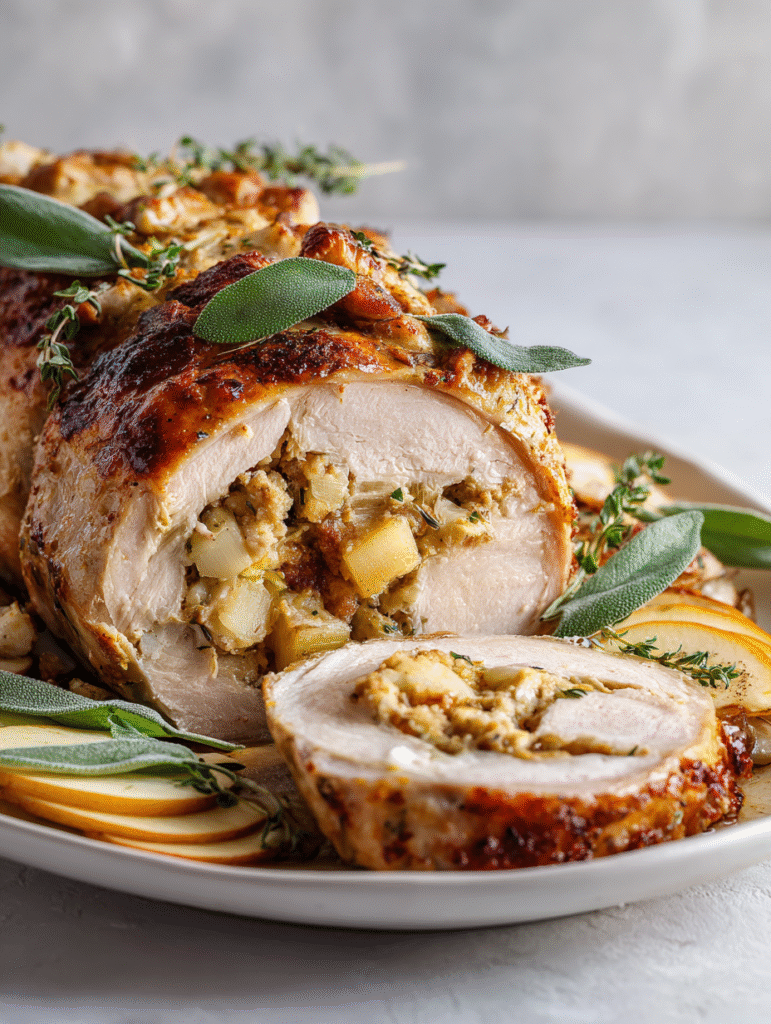
Christmas dinner often feels like a well-oiled machine, with recipes passed down and routines followed. But every so often, I crave something that sparks a little curiosity—like stuffing a roast with unexpected ingredients. It’s a way to shake things up while still holding onto the comfort of tradition.
Why I Keep Coming Back to This Roast
It’s a reminder that Christmas can be playful. The unexpected stuffing makes everyone curious, and the smell alone sparks cheer. It’s a dish I keep perfecting, because the joy of trying something new, even at a holiday table, is worth every minute.
Ingredients That Make This Roast Special
- Pork loin roast: Juicy, lean, with a mild flavor that takes on added herbs beautifully.
- Apple and sage stuffing: Sweet, aromatic, with a smoky hint of thyme—an autumnal twist.
- Garlic and lemon zest: Brighten the stuffing with a citrusy zing and savory depth.
- Butter and olive oil: Help brown the exterior and keep the meat moist.
- Breadcrumbs and nuts: Crunchy texture and earthy flavor—think chestnuts or walnuts for richness.
- Fresh herbs: Rosemary, thyme, and sage—aromatic and essential for depth.
- Salt and pepper: Simple seasoning that amplifies every flavor.
Tools of the Trade for a Standout Roast
- Roasting pan: Provides even heat and collects drippings.
- Kitchen twine: Keeps your stuffing inside and the shape intact.
- Sharp paring knife: Helps with precise cuts and stuffing prep.
- Meat thermometer: Ensures perfect doneness without guesswork.
The Art of Stuffing a Roast: Step-by-Step
Step 1: Preheat your oven to 180°C (350°F).
Step 2: Choose a roasting pan that’s roomy but not too big.
Step 3: Prepare your stuffing—more on that below.
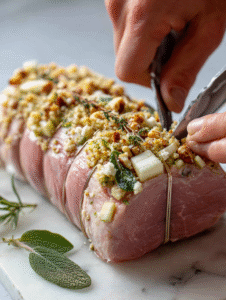
Step 4: Tie your roast securely with kitchen twine to keep the stuffing in place.
Cooking the Perfect Stuffed Roast: Key Checkpoints
- Ensure the roast reaches an internal temperature of 63°C (145°F) for safe, juicy meat.
- The stuffing should be hot and slightly bubbly around the edges.
- The roast’s exterior should be deep golden brown—no pale patches or burnt spots.
Common Roast Wrinkles and How to Smooth Them Out
- Cooking without a thermometer, risking dry or underdone meat.? Use a meat thermometer to avoid undercooking or overcooking.
- Cutting into hot meat immediately, losing moisture.? Let the roast rest for at least 15 minutes to redistribute juices.
- Not tying the roast, causing stuffing spillage during roasting.? Secure the stuffing with twine if it’s falling out.
- Roasting with a damp surface, leading to uneven browning.? Pat the roast dry before roasting.
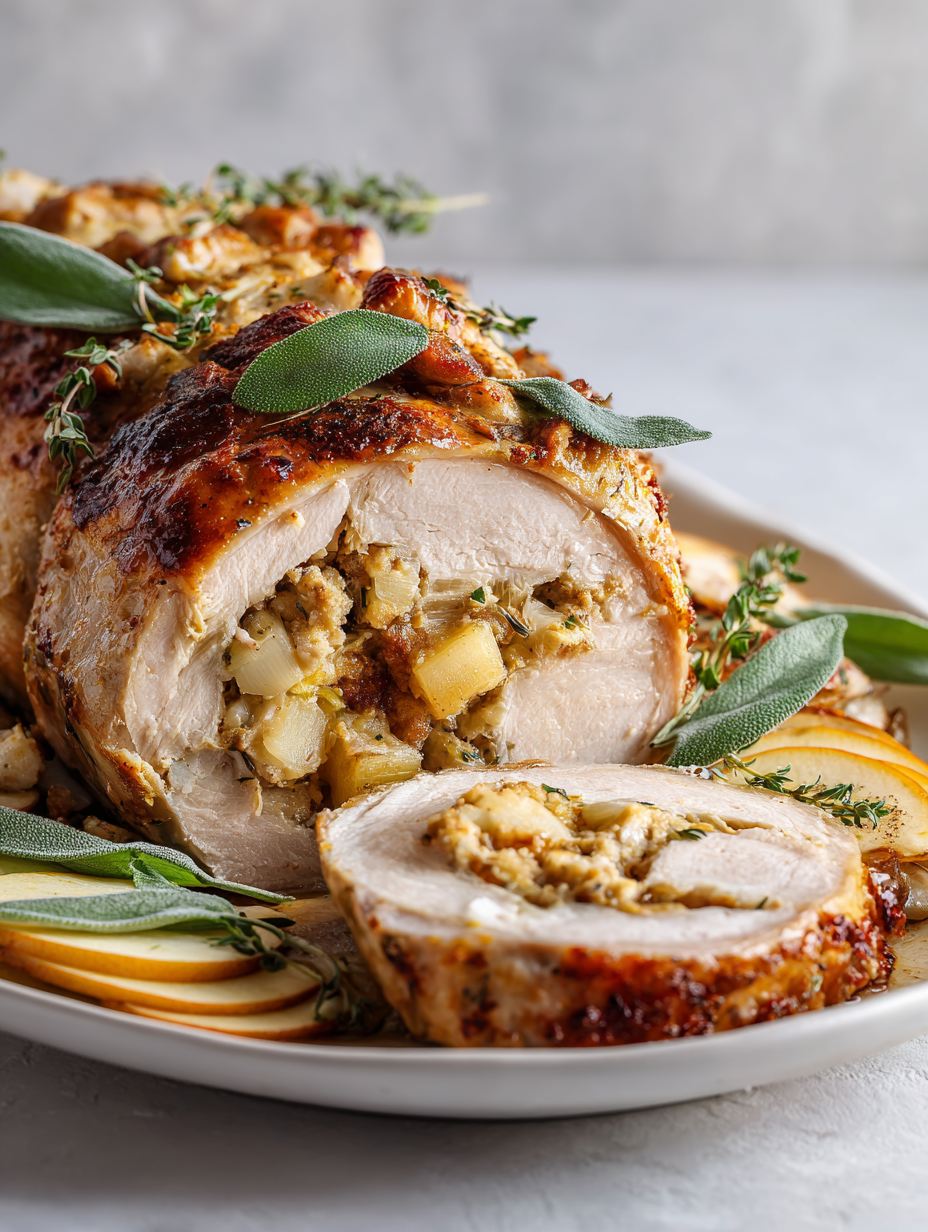
Stuffed Pork Loin Roast with Apple and Sage
Ingredients
Equipment
Method
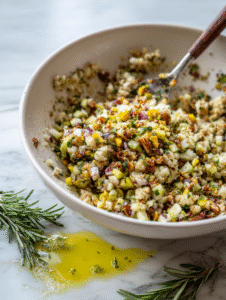
- Preheat your oven to 180°C (350°F). Prepare your ingredients by peeling and dicing the apples, chopping the sage, mincing the garlic, and zesting the lemon. Mix the apples, sage, garlic, lemon zest, breadcrumbs, nuts, olive oil, melted butter, rosemary, salt, and pepper in a bowl to form the stuffing.
- Using a sharp paring knife, carefully create a slit along the length of the pork loin to open it like a book. Gently flatten the meat with your hands to an even thickness.
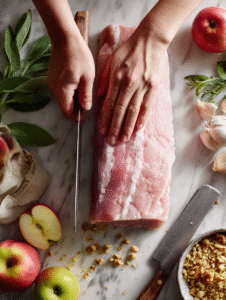
- Spread the apple and sage stuffing evenly over the inside of the pork loin, leaving a small border at the edges.
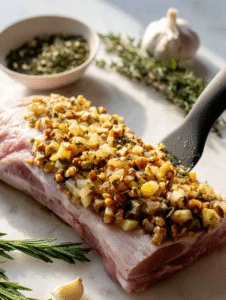
- Carefully roll up the roast, enclosing the stuffing inside, and tie it securely with kitchen twine at 1-inch intervals to keep the shape intact.
- Pat the outside of the roast dry with paper towels to ensure even browning. Rub the exterior with a little salt, pepper, and a drizzle of olive oil.
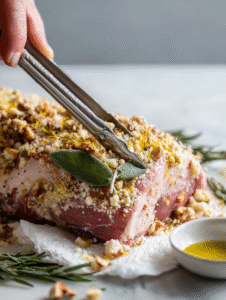
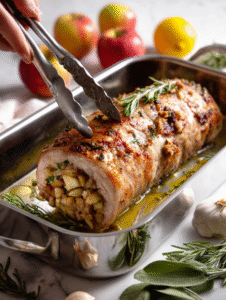
- Place the roast in a roasting pan and transfer to the oven. Roast for about 70 minutes, or until the internal temperature reaches 63°C (145°F) and the exterior is golden brown.
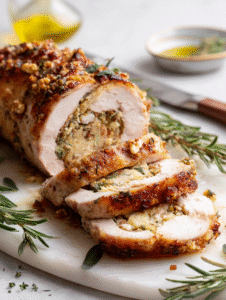
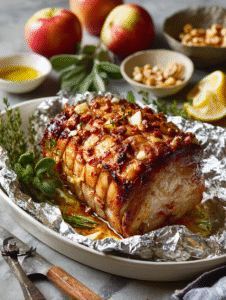
- Once cooked, remove the roast from the oven and tent it with foil. Let it rest for 15 minutes to allow the juices to redistribute.
- Slice the roast into thick, juicy rounds, revealing the flavorful stuffing inside, and serve hot for a festive presentation.

Hi, I’m Lily Ashworth – and if you’ve ever cried over a burnt grilled cheese or served cereal for dinner after a kitchen disaster, you’re in the right place. The phrase “say a little prayer for the burnt toast” became a family joke – something we’d mutter while scraping crumbs into the sink and laughing at yet another kitchen misadventure.