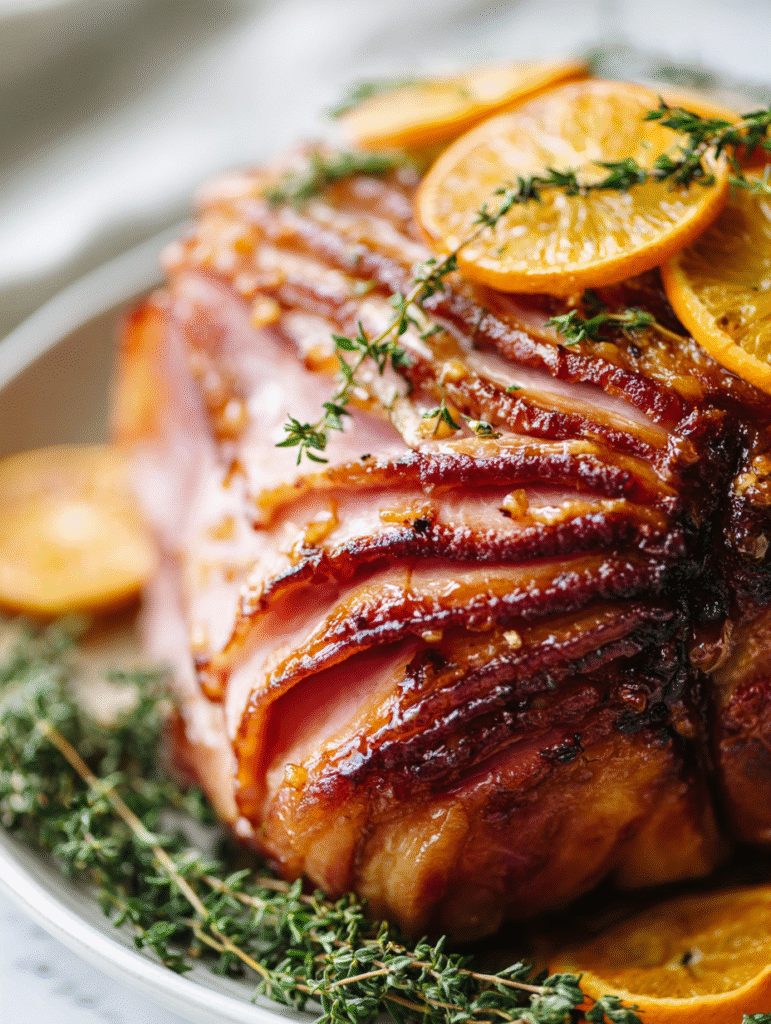
This glaze came from a moment of wanting something different—less cloying, more lively. I love the idea of bright citrus waking up the ham’s richness, especially during the holidays when everything feels a bit too sweet. It’s a simple change that transforms a classic, making it feel fresh and relevant. Plus, the aroma of thyme simmering with orange juice is just enough to make the whole house smell festive.
Why I keep making this glaze every year
The combination of citrus and thyme feels like a fresh breath in holiday cooking. It’s forgiving, forgiving enough that I can tweak the ingredients without ruining it. Watching the glaze bubble and turn glassy is oddly satisfying. It’s a reminder that simple ingredients, treated right, can make something truly memorable.
Breaking down the key ingredients
- Orange juice: Freshly squeezed for a tangy, bright base that cuts through the richness.
- Honey: Adds a smooth, floral sweetness that caramelizes beautifully.
- Dijon mustard: A touch of sharpness to balance the sweetness and enhance the glaze.
- Fresh thyme: Earthy, fragrant herb that infuses the glaze with herbal depth.
- Salt & pepper: Fundamental seasonings to bring out all the flavors.
- Optional: lemon zest: Lemon zest brightens the glaze with a zesty, citrusy kick.
- Brown sugar: For a deeper caramel flavor if you like a richer glaze.
Tools and equipment you’ll need
- Roasting pan: To hold and cook the ham evenly.
- Saucepan: To simmer and thicken the glaze.
- Sharp knife: To score the ham without tearing.
- Basting brush: To apply the glaze evenly.
- Meat thermometer: To check doneness precisely.
Step-by-step to a glossy, citrus-kissed glaze
Step 1: Preheat your oven to 160°C (320°F).
Step 2: Score the ham in a diamond pattern, about 1 inch apart.
Step 3: Mix the glaze ingredients in a saucepan: orange juice, honey, Dijon, and fresh thyme.
Step 4: Simmer the glaze on low, stirring often, until it thickens slightly, about 10 minutes.
Step 5: Place the ham in a roasting pan, brush generously with the glaze.
Step 6: Bake for 1.5–2 hours, basting every 20 minutes, until the glaze is sticky and caramelized.
Step 7: Increase heat to 200°C (390°F) for the last 10 minutes to deepen the glaze.
Step 8: Rest the ham for 15 minutes before carving and serving.
Cooking checkpoints and tips to keep in mind
- Ensure the ham is fully thawed before scoring and glazing.
- Baste often—every 20 minutes—to build a thick, sticky coating.
- Watch the glaze closely in the last 10 minutes to prevent burning.
- Use a meat thermometer—aim for 60°C (140°F) in the center for perfect doneness.
Common mistakes and how to fix them
- Too runny glaze.? If the glaze is too thin, simmer it longer until it thickens.
- Over-browned edges.? If the ham starts to burn, cover it loosely with foil.
- Lack of brightness in flavor.? If the glaze isn’t flavorful enough, add more thyme or a splash of lemon juice.
- Undone meat.? If the ham is undercooked, check the temperature—continue baking.
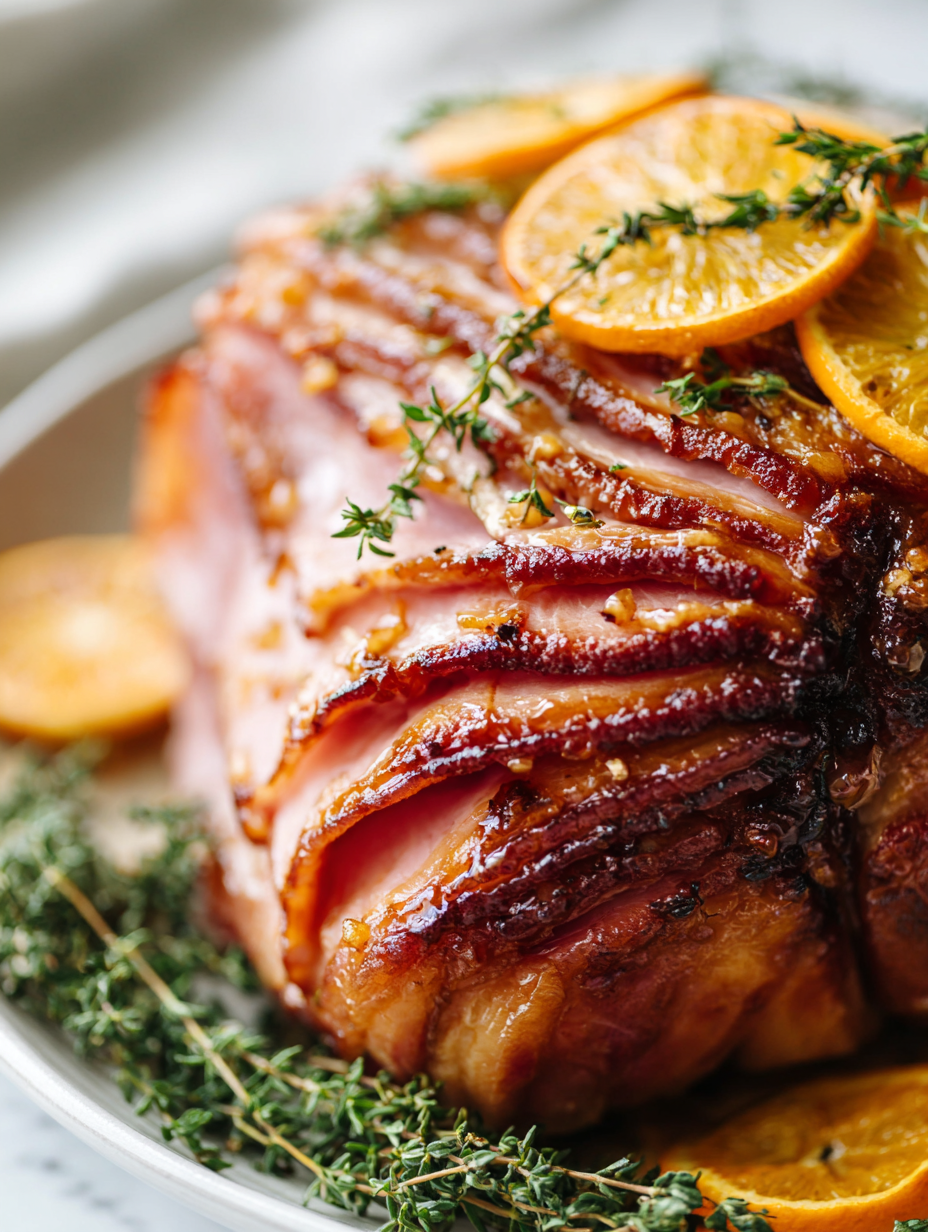
Citrus Thyme Glazed Ham
Ingredients
Equipment
Method
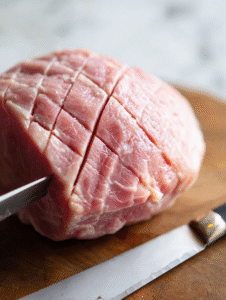
- Preheat your oven to 160°C (320°F). Place the ham on a sturdy cutting board and score it in a diamond pattern, about 1 inch apart, using a sharp knife. This helps the glaze penetrate and creates a beautiful presentation.
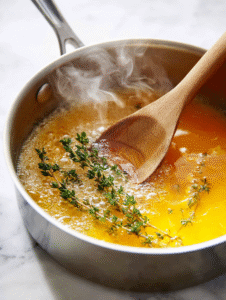
- Combine orange juice, honey, Dijon mustard, and thyme sprigs in a saucepan. Bring the mixture to a gentle simmer over low heat, stirring occasionally. Let it simmer for about 10 minutes until slightly thickened and fragrant, with the thyme releasing its aroma.
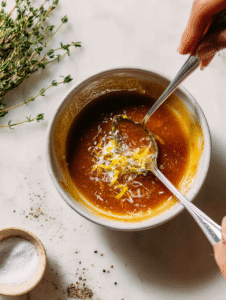
- Remove the thyme sprigs from the glaze and stir in lemon zest and brown sugar if using. Season with salt and pepper to taste. The glaze should be smooth, glossy, and slightly sticky.
- Place the scored ham in a roasting pan, and brush generously with the warm glaze using a basting brush. Make sure to cover all the scored surfaces for maximum flavor and shine.
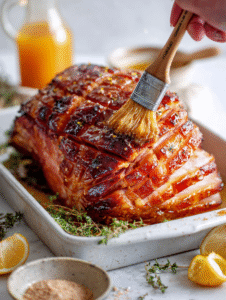
- Bake the ham in the preheated oven for about 1.5 to 2 hours, basting every 20 minutes with more glaze to build a thick, caramelized coating. The aroma of citrus and thyme will fill your kitchen as it cooks.
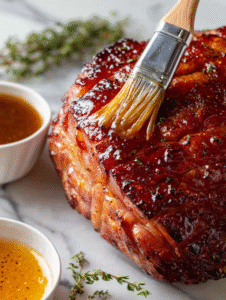
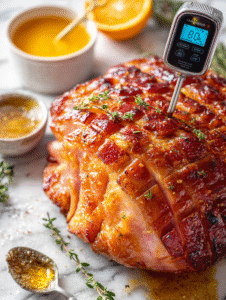
- In the last 10 minutes, increase the oven temperature to 200°C (390°F) to deepen the caramelization, watching closely to prevent burning. The glaze should turn a beautiful, glossy amber.
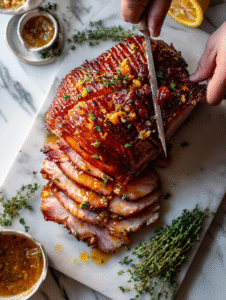
- Check the internal temperature of the ham with a meat thermometer; it should reach about 60°C (140°F). Once done, remove the ham from the oven and let it rest for at least 15 minutes to allow the juices to redistribute.
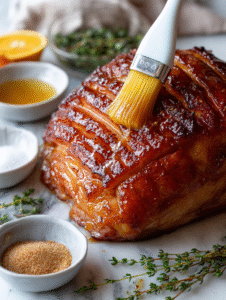
- Carve the ham into slices, then serve with any remaining glaze drizzled over the top. The result is a juicy, tender ham with a bright, sticky, citrus-herb crust that’s perfect for holiday gatherings.
Notes
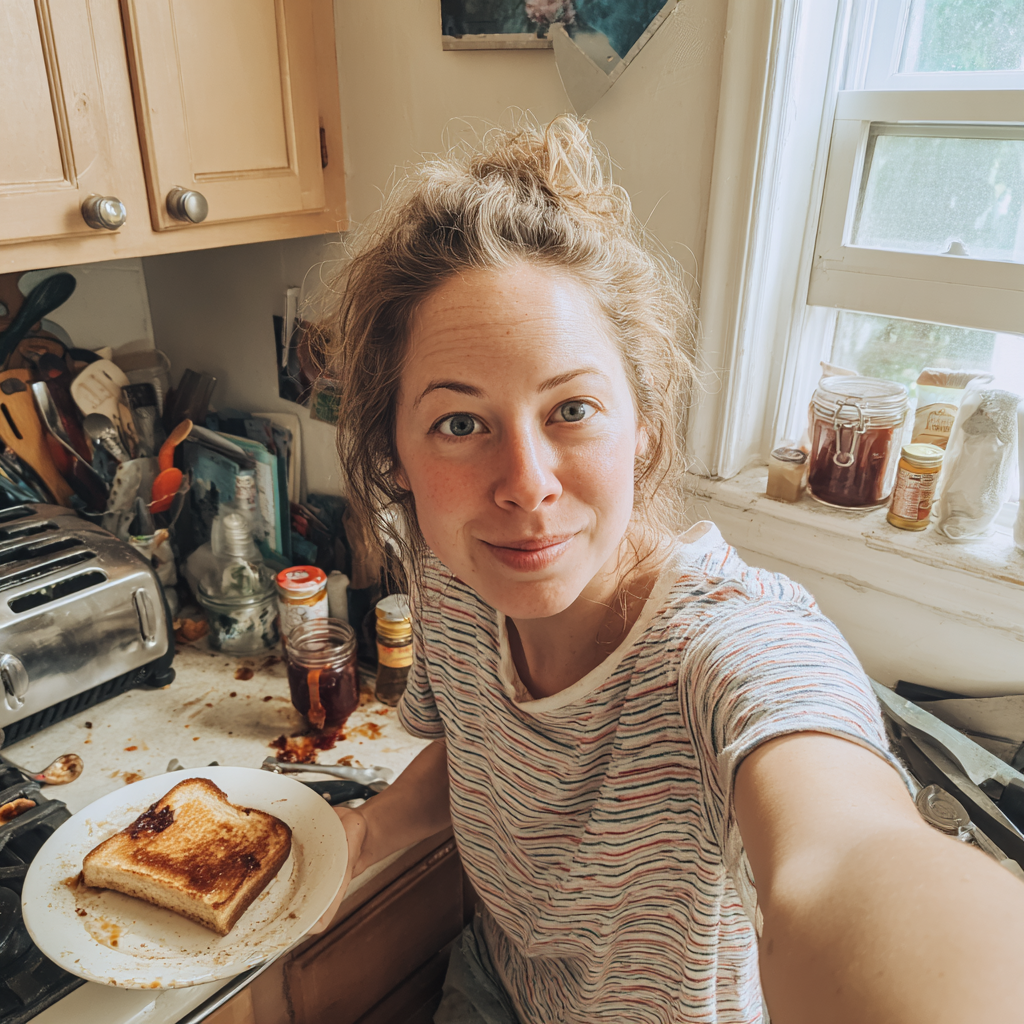
Hi, I’m Lily Ashworth – and if you’ve ever cried over a burnt grilled cheese or served cereal for dinner after a kitchen disaster, you’re in the right place. The phrase “say a little prayer for the burnt toast” became a family joke – something we’d mutter while scraping crumbs into the sink and laughing at yet another kitchen misadventure.