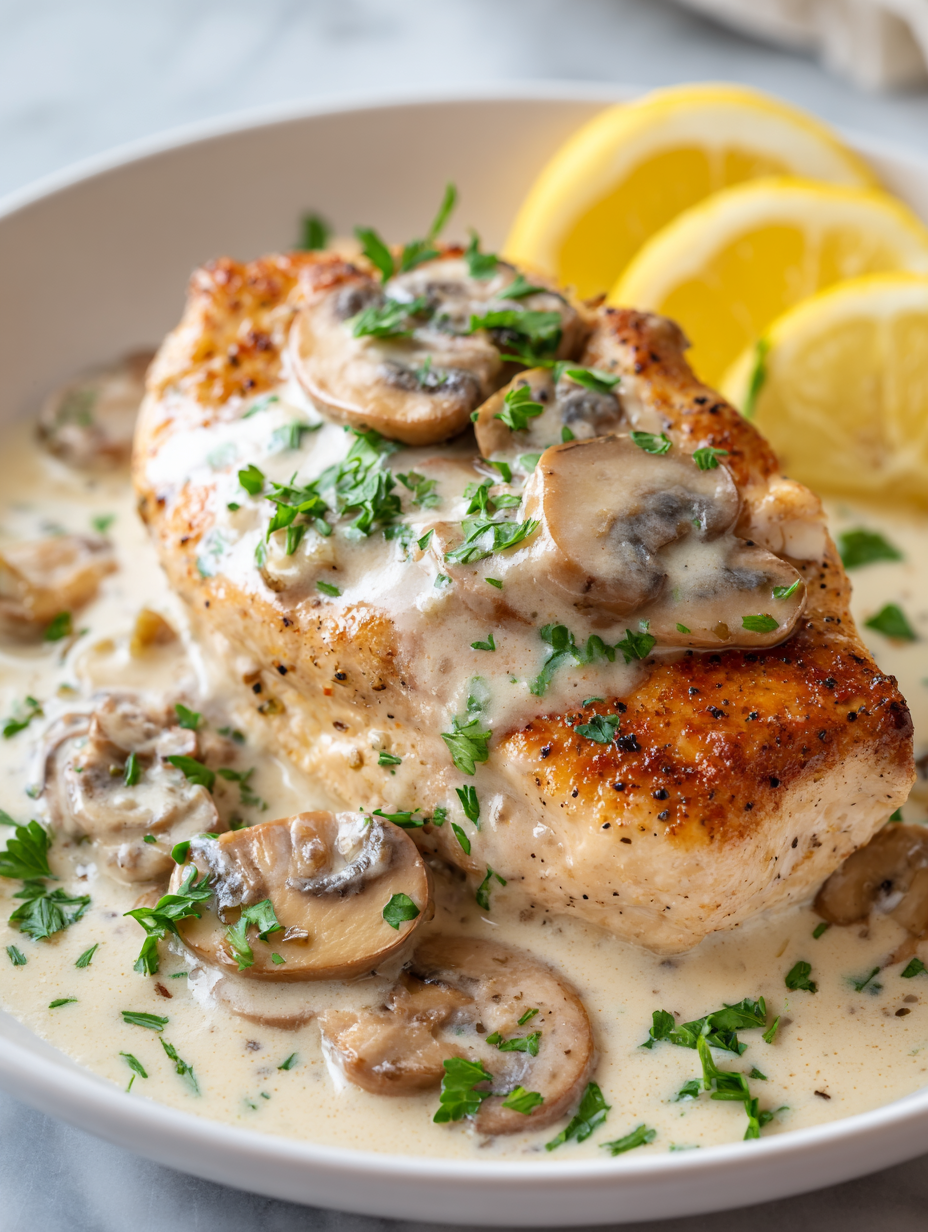
Pat each chicken breast dry thoroughly with paper towels; this helps achieve a crisp skin. Generously season all over with sea salt, especially underneath the skin, and let sit for about 10 minutes to allow the salt to penetrate.
Heat a heavy skillet over medium-high heat until hot, about 1 minute. Add a tablespoon of butter and a splash of oil; wait until it shimmers and releases a nutty aroma.
Place the chicken breasts skin-side down into the hot skillet, pressing lightly with tongs to ensure full contact. Sear without moving for 5–7 minutes until the skin is deep golden brown and crispy, listening for a satisfying crackle.
Flip the chicken breasts carefully with tongs and reduce the heat to medium. Cook for another 8–10 minutes, occasionally basting the skin with pan juices for extra flavor and crispness. The meat should feel firm but tender when gently pressed.
If desired, transfer the skillet to a preheated oven at 180°C (355°F) and roast for an additional 10 minutes to ensure even cooking. Use a meat thermometer—aim for an internal temperature of 65°C (149°F).
Remove the skillet from the oven and transfer the chicken to a plate. Let it rest for 5 minutes; this keeps the juices locked in, resulting in moist meat and crispy skin.
While the chicken rests, deglaze the pan with white wine, scraping up the browned bits to create a flavorful sauce. Add the lemon zest and juice, then simmer until slightly thickened and fragrant.
Slice the rested chicken breasts, arrange on plates, and spoon the lemon-wine sauce over the top. Garnish with fresh thyme and rosemary leaves for a fragrant finish.
Finish with a squeeze of fresh lemon, a crack of black pepper, and serve immediately for a crispy, juicy, and flavorful dish.